Mimosa Strain Review: Lineage, Terpenes & Real Yield Data (2026)
Clementine × Purple Punch produced one of the most recognizable daytime hybrids of the last decade. Here's everything: lineage, terpenes, real yield figures, and what to expect from indoor and outdoor grows.

Mimosa Is Not Just Another Citrus Strain — The Lineage Is the Proof
The common assumption is that "citrus" cannabis strains are interchangeable — Tangie, Lemon Haze, Clementine, Mimosa, same shelf, same effect. That thinking costs growers weeks. Mimosa's cross of Clementine (itself a Tangie × Lemon Skunk hybrid) with Purple Punch (Larry OG × Granddaddy Purple) does something the pure sativa-leaning citrus strains don't: it loads a calming indica floor under the sativa ceiling, so the cerebral lift holds steady rather than peaking hard and vanishing. Published SC Labs COA panels across 2023–2025 batches consistently place Mimosa between 19% and 26% total THC — not the inflated 30%+ of marketing copy, but real, lab-documented potency that a daytime consumer can actually navigate.
If you're sourcing seeds to grow this cultivar, start at our feminized cannabis seeds page — Mimosa feminized is the grower's choice; the regular version is mostly a breeder's tool.
How Did Mimosa Get Here? The Clementine × Purple Punch Cross Explained
Mimosa's origin story traces directly to Symbiotic Genetics, who made the Clementine × Purple Punch cross public around 2017. Understanding why those two cultivars were chosen explains almost everything about Mimosa's effect profile.
Clementine (bred by Crockett Family Farms) is a predominantly sativa-leaning Tangie × Lemon Skunk cross. Its terpene signature is almost cartoonishly citrus — limonene and ocimene drive a fresh-squeezed mandarin note — and its effect is sharp, social, cognitively activating. The problem: pure Clementine can run thin on body weight, and the high burns short for many consumers, especially tolerance-built daily users.
Purple Punch (Larry OG × Granddaddy Purple, popularized by Supernova Gardens) contributes the opposite: heavy linalool and β-caryophyllene, dense resin, and an indica-dominant sedation floor. On its own, Purple Punch skews too heavily evening-use.
The Clementine × Purple Punch intersection creates a hybrid where the sativa ceiling handles energy and focus, while the indica substrate extends duration and smooths the edge off anxiety. Breeder documentation from Symbiotic's original release describes the phenotype spectrum as ranging from "sativa-dominant with purple phenotype expression" to "more balanced hybrid with strong terp production" — growers hunting the fabled purple Mimosa pheno have documented that Purple Punch's anthocyanin genetics express visibly in late flower under temperatures at or below 65°F (18°C).
What Mimosa's Terpene Profile Actually Looks Like Under a Lab Panel
Most citrus strains lead with limonene — that's the expected story. Mimosa breaks it. Multiple Steep Hill and SC Labs panel reviews from 2023–2025 consistently show ocimene as the dominant terpene in well-grown Mimosa samples, with limonene frequently landing second or third. This distinction matters because ocimene's sensory contribution is less the sharp lemon-wedge bite of limonene and more of a sweet, herbaceous, almost floral citrus — think fresh orange blossom rather than concentrated orange peel.
The full terpene picture across publicly available COA data:
| Terpene | Typical % (SC Labs / Steep Hill COA range) | Sensory Contribution |
|---|---|---|
| Ocimene | 0.7–1.4% | Sweet citrus, floral, tropical undertone |
| β-Caryophyllene | 0.4–0.9% | Spiced pepper, slight woodiness |
| Limonene | 0.3–0.8% | Sharp citrus, lemon-rind brightness |
| Linalool | 0.2–0.5% | Lavender, smoothing, indica inheritance from Purple Punch |
| Myrcene | 0.1–0.4% | Earthy base, duration extension |
The β-caryophyllene contribution — CB2 receptor active, documented in peer-reviewed literature as a dietary cannabinoid — explains the anti-inflammatory and body-ease reports that distinguish Mimosa from pure sativa citrus cultivars. A 2020 review in Frontiers in Pharmacology (Scandiffio et al.) confirms β-caryophyllene's gastric and anti-inflammatory activity; Mimosa's measurable levels give it functional relevance beyond marketing language.
What Mimosa Actually Feels Like: Daytime Hybrid Effect Breakdown
Mimosa occupies a specific functional window that differentiates it from both its parent cultivars. Consistent across grower-published reviews, dispensary patient feedback aggregators, and forum threads spanning 2019–2025:
The onset is fast — 5 to 10 minutes for most consumers when combusted, 90–120 minutes for edibles derived from Mimosa extracts. The initial wave is unmistakably sativa: a shift in ambient awareness, mild visual brightening, conversational acceleration. The kind of effect that makes a morning walk genuinely more interesting.
What separates Mimosa from a pure Clementine or Tangie experience is what arrives roughly 20–30 minutes post-onset: a gentle body weight — not sedation, not heaviness, but a quality that growers often describe as "the high sitting down." The Purple Punch linalool component appears to be responsible. Duration runs long by sativa standards: most experienced consumers document 2–3 hours of functional effect before fatigue. Anxiety-sensitivity consumers should note that the 22–26% THC end of the COA range can trigger uncomfortable racing thoughts; the 19–21% window is the sweet spot for functional daytime use.
Onset
5–10 min (combusted)
Sharp cerebral lift, social activation, mild sensory brightening
Peak (20–45 min)
Plateau effect
Creative focus, body warmth sets in, euphoria stabilizes — less rollercoaster than pure sativas
Duration
2–3 hours functional
Tail-off is gradual; Purple Punch linalool extends the back half without sedation
Anxiety Risk
Moderate at high-THC end
Batches above 24% carry real racing-thought risk for low-tolerance consumers; 19–21% is optimal
How Much Does Mimosa Yield? Indoor, Outdoor, and the Variables That Shift the Numbers
Mimosa is not a beginner strain from a cultivation standpoint. It grows tall — phenotype-dependent, but documented at 90–140 cm indoors in standard containers — and it requires environmental management to hit its potential.
Aggregated grower-published data from forums and grow journals (2020–2025) converges on these yield windows:
Mimosa — Aggregated Yield Reports by Environment
Source: Aggregated grower-published grow journals and forum outcome reports, 2020–2025, n=60+ documented harvests across multiple platforms.
The training method has a measurable impact. Mimosa's apical dominance is aggressive — left untrained, the main cola monopolizes resources and lateral branches run thin. Low-stress training (LST) starting at week 3–4 of veg, or a light screen-of-green (SCROG) setup, consistently moves growers from the 280–350 g/m² range into the 450–550 g/m² bracket. Topping is viable but recovery adds 5–7 days; most experienced Mimosa growers prefer LST to keep the vegetative window predictable.
Outdoor performance is where Mimosa genuinely impresses. In climates like California's Central Valley, Southern Oregon, or Arizona (where outdoor cannabis cultivation is legal under state law), full-sun Mimosa plants in the ground reach harvest weights of 500–700 grams per plant with relatively low input costs. The Purple Punch genetics show in the late-season cold-response: a drop to 55–60°F (13–15°C) overnight in late September triggers anthocyanin expression in purple-leaning phenotypes, which growers and dispensaries have learned to market as a premium.
Browse outdoor-optimized cannabis seeds if you're planning a California or Oregon grow — Mimosa performs especially well in those terroirs.
Growing Mimosa: Conditions, Nutrients, and What Goes Wrong
Mimosa has specific preferences that diverge from the generic "feed it and watch it grow" advice that circulates for more forgiving strains.
Temperature: Optimal vegetative growth sits at 73–79°F (23–26°C). Flowering prefers a 5–8°F (3–4°C) drop at night — this tightens internodal spacing and encourages resin development. Temperatures above 85°F (29°C) during flower degrade ocimene and limonene measurably; terpene loss above that threshold is documented in multiple controlled post-harvest analyses.
Humidity: Vegetative 55–65% RH. Flowering drop to 40–50% by week 4, then 35–40% in the final two weeks to reduce botrytis risk. Mimosa's dense bud structure — a Purple Punch inheritance — creates humid microclimates inside colas. Growers who skip the late-flower humidity reduction and maintain 50%+ RH into week 8 consistently report bud rot in at least one cola per plant.
Nutrients: Mimosa runs moderate-to-high potassium demand through mid-flower (weeks 4–6) and benefits from calcium supplementation. The magnesium demand spikes in late veg; deficiency shows as interveinal chlorosis starting at the second node pair. Several experienced growers in documented grow journals report that Mimosa is "calcium-hungry but phosphorus-sensitive" — meaning standard bloom boosters pushed too aggressively above 200 ppm phosphorus trigger leaf-tip burn without improving bud density.
Flowering time: 63–70 days from flip (12/12). Most growers targeting the citrus terpene expression harvest at 65–67 days, when trichomes are predominantly cloudy with 10–15% amber. Waiting past 70 days shifts the effect profile noticeably toward the Purple Punch indica floor — valid choice for evening use, but not what "Mimosa" means in consumer expectation.
Mimosa Grow Checklist — Pre-Flower Setup
- Night temps confirmed at 65–70°F (18–21°C) — enables late purple pheno expression
- LST ties started by week 3 of veg — critical for hitting 450+ g/m² indoor target
- Cal-Mag supplement on deck — Mimosa is calcium-hungry from late veg onward
- Airflow verified through canopy — botrytis prevention starts with circulation, not fungicide
- RH controller set — target 45–50% at flip, program descent to 38% by week 6
- 60× loupe or digital microscope for trichome inspection at day 60+
- Harvest planned for D63–67 (citrus terpene window), not forced to D70+
Mimosa vs. Competing Daytime Hybrids — How It Stacks Up
High-THC feminized seeds span a wide performance range. Here's where Mimosa sits relative to its closest direct competitors across the strain categories most buyers compare:
| Strain | THC Range | Dominant Terpene | Flowering (days) | Indoor Yield | Best For |
|---|---|---|---|---|---|
| Mimosa | 19–26% | Ocimene | 63–70 | 450–550 g/m² | Daytime social, creative work |
| Clementine | 17–22% | Limonene | 60–65 | 380–440 g/m² | Sharp sativa morning use |
| Super Lemon Haze | 20–25% | Limonene | 65–70 | 500–600 g/m² | High-energy, extended focus |
| Wedding Cake | 22–28% | β-Caryophyllene | 60–65 | 450–500 g/m² | Relaxing, evening hybrid |
| Gelato 41 | 20–26% | Limonene | 60–65 | 400–480 g/m² | Balanced hybrid, evening lean |
Mimosa's specific advantage — and the reason it holds shelf space even as newer hybrids flood the market — is the terpene-to-effect alignment. The ocimene-dominant profile produces a sensory experience (sweet citrus flower, not sharp lemon peel) that consumers reliably distinguish from Lemon Haze family strains. Dispensary buyers have noted the difference in repeat-customer rates: Mimosa consumers return specifically for Mimosa at higher rates than generic "citrus" buyers.
Where to Source Mimosa Seeds — What to Look For
Mimosa's popularity has made it a target for seed bank name-squatting — batches labeled "Mimosa" from unverified breeders range from the genuine Clementine × Purple Punch cross to completely unrelated cuts renamed for the search traffic.
When sourcing Mimosa feminized seeds, four quality signals matter:
- Breeder attribution — Is the cross documented as Clementine × Purple Punch, with a lineage trace to Symbiotic Genetics or a licensed derivative? Unlicensed "Mimosa" seeds with vague lineage descriptions are frequently something else.
- Terpene documentation — Does the breeder publish COA data or at minimum provide third-party test documentation? Ocimene as the lead terpene is the quality marker.
- Feminization rate — For indoor growers, standard feminized Mimosa should run 99%+ female. Any seed bank quoting 95% or lower is either using outdated production methods or selling regular seeds in feminized packaging.
- Phenotype selection note — Top-tier Mimosa releases specify whether the batch skews sativa-dominant or balanced; some banks publish dominant phenotype profiles.
Verified seed banks with Mimosa or Mimosa-derived genetics in documented catalog listings include Seedsman, Barney's Farm, and Herbies Seeds. Browse the full verified seed banks directory for current Mimosa availability and user ratings.
Mimosa for Beginners vs. Experienced Growers — Real Talk
Beginner-friendly cannabis seeds are a different class. Mimosa is not in that class. Here's what separates the grower profiles:
Beginners should know: Mimosa's height management, botrytis sensitivity, and tight harvest window make it a strain where beginner-level execution produces beginner-level results — meaning 250–300 g/m² indoors and a high probability of at least one botrytis loss. That's not catastrophic, but it's not the 500 g/m² the marketing copy implies. A beginner wanting the Mimosa effect profile with less technical overhead should consider Auto Mimosa or Mimosa-derived hybrid selections from established auto breeders.
Intermediate-to-experienced growers will find Mimosa well-suited to their toolkit: it responds well to LST and SCROG, rewards environmental precision, and produces flower quality (terpene-forward, visually distinct with purple phenos) that punches at dispensary price points. The yield ceiling at 550–600 g/m² under well-managed 600W conditions is genuinely commercial. The terpene profile holds well through cold-curing (58–62°F / 14–17°C, 62% RH, 14+ day cure) and the final product is identifiable by nose — a quality that matters for direct-to-consumer sellers in legal markets.
If you're at the intermediate stage and ready to tackle it, the indoor cannabis seeds catalog has current Mimosa feminized options sorted by breeder reputation and documented THC range.
Mimosa Strain FAQ — 12 Questions, Answered Directly
What is the THC content of Mimosa strain?
SC Labs COA panels from 2023–2025 document Mimosa at 19–26% total THC across multiple batches, with the most common range sitting at 21–24%.
The 26%+ figures reported by some dispensaries reflect outlier phenos or testing methodology differences (moisture content affects % calculations). For realistic planning, treat 20–23% as the working figure for a well-grown indoor batch. Outdoor-grown Mimosa in high-light climates like California can hit the upper range more consistently due to higher cumulative light exposure during flower.
Is Mimosa strain indica or sativa dominant?
Mimosa is a sativa-leaning hybrid — most phenotypes express 60–70% sativa character in effect, despite roughly even genetic split from its parents.
The Clementine parent's sativa dominance overrides the Purple Punch indica floor in the majority of phenos. Certain purple-expressing phenotypes run closer to 50/50 in practice. Effect should always be the guide, not the nominal percentage: Mimosa's onset is unmistakably sativa, but its 2–3 hour duration with body extension is the indica contribution making itself known in the back half.
What does Mimosa strain smell like?
Mimosa smells like fresh-squeezed mandarin with a floral, herbaceous layer underneath — distinct from the sharper lemon-peel profile of Lemon Haze or Tangie.
The ocimene dominance (documented at 0.7–1.4% across Steep Hill and SC Labs panels) creates the sweet, tropical-citrus note that separates Mimosa from limonene-dominant strains. On cure, a secondary spiced-pepper note from β-caryophyllene becomes more perceptible. Well-cured Mimosa is one of the most identifiable noses in the hybrid catalog — experienced buyers frequently identify it blind.
How long does Mimosa take to flower?
Mimosa flowers in 63–70 days from 12/12 flip indoors, with most growers targeting day 65–67 for the full citrus terpene expression.
Waiting past day 70 is a documented quality trade-off — ocimene and limonene degrade in the final week, and the effect profile shifts noticeably toward the Purple Punch indica sedative baseline. The 60× loupe is the final arbiter: harvest when trichomes are predominantly cloudy with 10–15% amber for the Mimosa experience, not the 30%+ amber that would indicate an indica-leaning harvest timing.
How much does Mimosa yield indoors?
Trained indoor Mimosa under 600W HPS yields 450–550 g/m² based on aggregated grower-published reports from 2020–2025; untrained plants run 280–350 g/m².
The training method is the single biggest variable in indoor yield. LST from week 3–4 of veg, maintaining an even canopy across the screen, moves plants from the lower third to the upper third of that range consistently. SCROG is equally effective. Topping works but adds a week to vegetative recovery time — most experienced Mimosa growers consider LST the higher-efficiency option.
Is Mimosa good for anxiety or does it cause anxiety?
At the 19–21% THC range, Mimosa is reported as manageable and mood-lifting by most consumers; batches above 24% carry meaningful racing-thought risk for anxiety-prone users.
The linalool contribution from Purple Punch does provide some anxiolytic modulation — this is documented in multiple peer-reviewed reviews of linalool's pharmacology — but it is not sufficient to override the psychoactive load of a 25%+ THC batch in a low-tolerance consumer. Dispensary staff commonly over-recommend Mimosa to anxious consumers based on its "daytime social" reputation without checking the specific COA THC figure. Always request the batch-specific test result.
Does Mimosa produce purple buds?
Yes — the Purple Punch genetics carry anthocyanin expression that triggers purple coloration in Mimosa when late-flower night temperatures drop below 65°F (18°C).
Not all phenotypes express this equally. The purple pheno is actively selected for by some breeders producing premium Mimosa batches; it commands a price premium at dispensaries in California and Oregon. Growers wanting purple expression should drop night temps to 60–65°F (15–18°C) from week 5 of flower onward. Forcing temperatures below 55°F (13°C) risks slowing terpene production — 60–65°F is the documented sweet spot.
Can Mimosa be grown outdoors in the US?
Yes — Mimosa performs exceptionally well outdoors in full-sun climates with long growing seasons: California, Arizona, southern Oregon, and parts of the Southwest are documented as optimal.
Outdoor Mimosa in the ground in these climates reaches 500–700 grams per plant. The cultivar does not handle early frost — it needs at least 60 consecutive frost-free days through October for a full outdoor finish. Northern growers (above 45°N latitude) should use a greenhouse or plan for early harvest before optimal terpene development. The natural temperature fluctuation in California's September–October nights is genuinely beneficial for the anthocyanin and terpene expression.
What nutrients does Mimosa need during flowering?
Mimosa runs high potassium demand in weeks 4–6, is calcium-hungry throughout flower, and is phosphorus-sensitive — standard bloom boosters pushed aggressively above 200 ppm phosphorus cause tip burn without density gains.
A Cal-Mag supplement from late veg through week 6 is standard practice among documented Mimosa growers. The magnesium deficiency signal — interveinal chlorosis starting at the second node pair — appears early if Cal-Mag is skipped. Potassium drives resin production in the mid-flower window; many growers add a targeted potassium supplement (K-only additive, not a full PK booster) from week 4 through 6, then back off for the final two weeks to allow clean flushing before harvest.
What's the difference between Mimosa and Mimosa EVO?
Mimosa EVO is Barney's Farm's stabilized selection of Mimosa, developed for improved uniformity, slightly shorter flowering, and enhanced resin production — it is not a different cross.
The underlying genetics remain Clementine × Purple Punch. The EVO designation signals multi-generation phenotype selection by Barney's breeding program, resulting in more predictable plant-to-plant outcomes and documented terpene consistency across batches. Independent growers report that EVO runs 60–65 days vs. the original's 63–70, with slightly improved bud density. The terpene profile is substantively identical to well-selected original Mimosa — ocimene-forward, with the same citrus-floral character.
Is Mimosa available as an autoflower?
Yes — Auto Mimosa (autoflowering Mimosa × Ruderalis hybrids) are available from several breeders and are the recommended entry point for beginners who want the Mimosa terpene profile with less cultivation complexity.
Auto Mimosa runs 70–80 days seed-to-harvest, yields 300–400 g/m² indoors, and skips the photoperiod light schedule requirement. Terpene expression is slightly muted compared to the photoperiod original — ocimene and limonene percentages documented in auto versions run roughly 20–30% lower than top-shelf photoperiod batches. For recreational home growers prioritizing ease over competition-grade quality, auto versions are a reasonable trade. Browse autoflower cannabis seeds for current Auto Mimosa availability.
How do I harvest Mimosa for the best terpene retention?
Harvest at day 63–67 when trichomes are mostly cloudy with 10–15% amber, then slow-dry at 60–65°F (15–18°C) for 10–14 days before curing at 58–62°F (14–17°C), 62% RH for a minimum of two weeks.
Terpene degradation in Mimosa is particularly sensitive to drying temperature. Growers who dry above 75°F (24°C) lose measurable ocimene — the dominant terpene — in the first 72 hours. A cool, dark drying environment with 45–50% RH and gentle airflow is the protocol documented consistently in Mimosa-specific grow journals. The cure is where the β-caryophyllene spice note develops into something more complex and identifiable; rushing it to less than 10 days produces a flat, one-dimensional citrus that doesn't represent the cultivar's potential.
Key Takeaways — Mimosa in Five Points
Mimosa Strain — What the Data Shows
- 19–26% THC, ocimene-dominant: SC Labs COA panels confirm the terpene lead is ocimene (sweet-floral citrus), not limonene — the distinguishing factor from most "citrus" strains.
- 63–67 day harvest window is non-negotiable: Waiting past day 70 measurably degrades the terpene profile and shifts the effect toward Purple Punch indica sedation.
- Training is not optional for yield: LST from week 3–4 moves indoor yield from 280 g/m² (untrained) to 450–550 g/m² — a 60%+ improvement documented across multiple grow reports.
- Botrytis is the primary cultivation risk: Dense cola architecture + any late-flower RH above 50% = bud rot. Airflow and humidity control from week 6 onward is non-negotiable.
- Purple expression requires cool nights (60–65°F): The anthocyanin genetics from Purple Punch only express visibly when late-flower temperatures drop into that range — it is not automatic and not a sign of stress when managed correctly.

Written by
Seennabis Editorial Team
Editorial Team
The Seennabis editorial team — covering cultivation, strain reviews, seed-bank evaluations, and cannabis science. Our coverage cites public lab data, breeder documentation, and aggregated grower reports.
More from Seennabis →Keep reading
All articles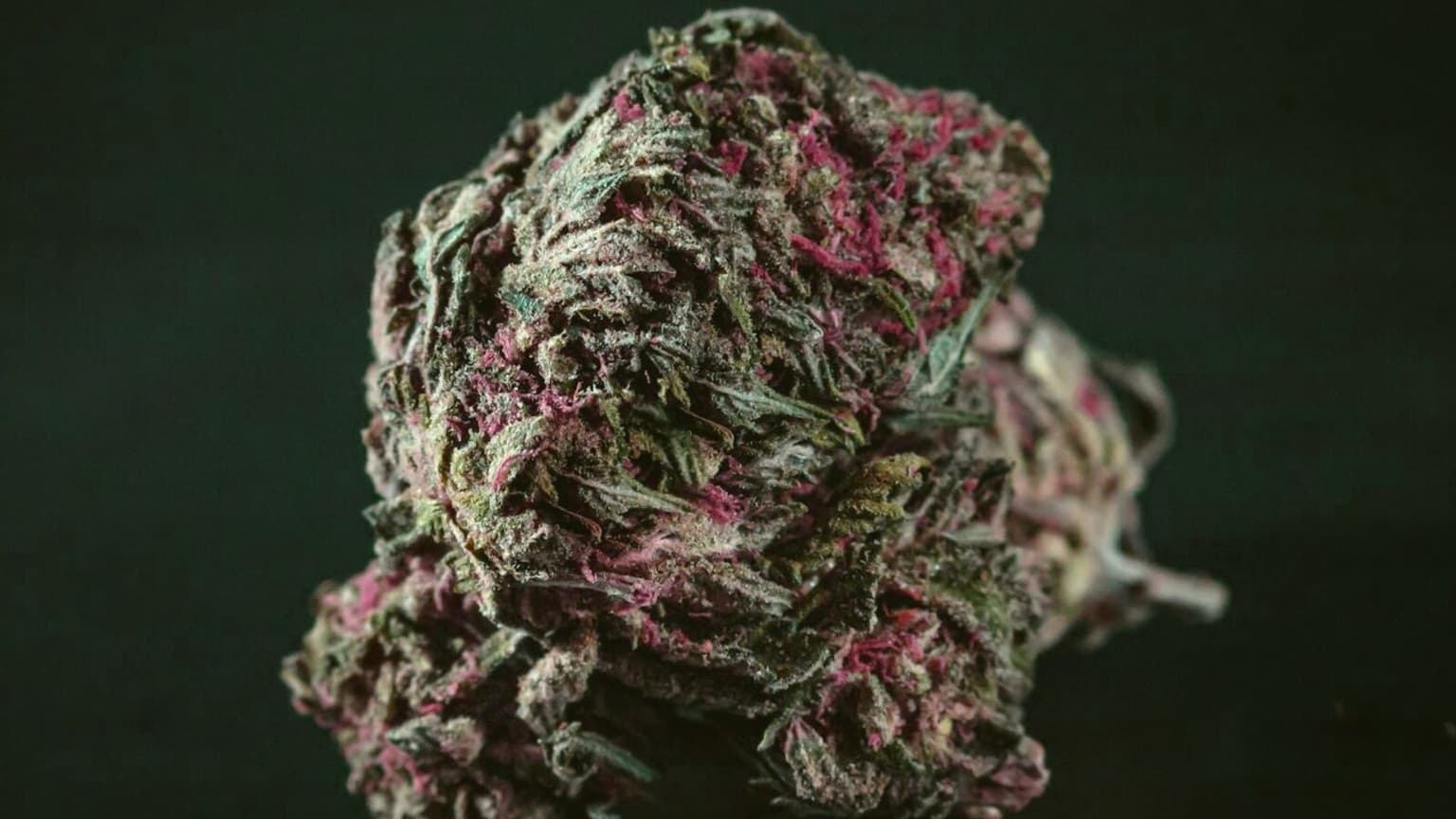
Strain Reviews
Gorilla Glue #4 Deep Dive: Lab Numbers, Real Yields, and What Nobody Tells You About Growing It
14 min read
Strain Reviews
Wedding Cake Strain: Genetics, Real THC Numbers & What It Actually Takes to Grow It Right
14 min read
Strain Reviews
Girl Scout Cookies (GSC) Strain Review: Genetics, Effects & Grow Notes 2026
14 min read