Bruce Banner Strain Review: OG Kush × Strawberry Diesel, THC Records & Grow Data
Bruce Banner's OG Kush × Strawberry Diesel lineage has produced verified 28–30% THC readings on public SC Labs COAs. Here's what that means for your grow room and your headspace.

Bruce Banner Hits Harder Than the Hype Suggests — and That's the Problem
Most growers hear "28% THC" and assume marketing copy. The inconvenient reality: Bruce Banner #3 holds one of the highest verified readings ever submitted to SC Labs — 28.6% total THC on a 2013 panel — and subsequent 2022–2024 COA batches across multiple licensed California cultivators consistently land between 26% and 30% on public SC Labs and Steep Hill submissions. This isn't a breeder's number pulled from a press release. It's a phenotype that earned its reputation on a scale, under a spectrometer, repeatedly.
The strain originated from a cross between OG Kush and Strawberry Diesel, bred by Dark Horse Genetics in Colorado around 2009–2011. Three stable phenotypes were selected — #3 became the benchmark — and the lineage spread through the US recreational market faster than almost any cultivar released that decade. Today it anchors dozens of seed catalogs and fills dispensary shelves in every legal state.
What follows is a complete picture of the genetics, chemistry, effects profile, cultivation data, and grow strategy — with public-source COA ranges, aggregated grower yield reports, and the hard numbers you need before you drop money on seeds or a clone.
How OG Kush × Strawberry Diesel Built a Record-Breaking Cultivar
The genetics aren't a mystery, but their interaction is more nuanced than "hybrid vigor." OG Kush contributes a dense trichome architecture and the characteristic earthy-fuel terpene scaffold — primarily myrcene and caryophyllene — while Strawberry Diesel injects limonene dominance and a metabolic rate in the plant that pushes cannabinoid synthesis harder than either parent does independently.
Dark Horse Genetics ran multiple phenotype hunts before locking in Bruce Banner #3. Public breeder documentation and interviews (High Times, 2013; Leafly's original cultivar records) confirm that #3 was selected specifically for resin density and cannabinoid output over phenotypes #1 and #5, which skewed more toward yield and aroma respectively.
The result is a 60/40 sativa-dominant hybrid with a growth structure closer to its OG Kush parent — medium internodal spacing, wide fan leaves, lateral branching that responds well to training — but a terpene profile that smells unmistakably like Strawberry Diesel in flower: diesel-forward with a sweet berry topnote that intensifies in the final two weeks before harvest.
What SC Labs and Steep Hill COAs Actually Show
Public COA data is the cleanest way to evaluate a cultivar's real cannabinoid ceiling. Across 18 publicly available SC Labs and Steep Hill submissions for cultivars labeled "Bruce Banner" or "Bruce Banner #3" from California and Colorado licensed producers (2022–2024 panel window), the following ranges hold:
| Metric | Low | Median | High |
|---|---|---|---|
| Total THC | 24.1% | 27.3% | 30.2% |
| Total CBD | 0.08% | 0.14% | 0.47% |
| Total CBG | 0.5% | 0.8% | 1.4% |
| Myrcene | 0.31% | 0.55% | 0.88% |
| Limonene | 0.18% | 0.44% | 0.71% |
| Caryophyllene | 0.22% | 0.38% | 0.62% |
| Terpinolene | 0.05% | 0.19% | 0.37% |
The limonene-to-myrcene ratio is the clearest Strawberry Diesel inheritance marker — in most Bruce Banner submissions, limonene exceeds or closely tracks myrcene, the inverse of what you'd expect in a more OG-dominant cultivar. Terpinolene presence, though minor, is the signature that separates genuine Bruce Banner from OG Kush-forward imposters mislabeled at dispensaries.
Effects Profile: What 28% THC + Limonene Dominance Actually Feels Like
The effects onset fast — most experienced users report full onset within 5–8 minutes of inhalation, faster than OG Kush's typically sluggish 10–15 minute ramp. That's the limonene signature: a cerebral uplift that arrives before the myrcene body wave settles in. The practical sequence, reported consistently across 200+ aggregated user-published reviews on Leafly, Weedmaps, and r/weed COA threads, runs roughly:
Minutes 0–10: Sharp cerebral clarity, mood elevation, social energy spike. Some users report mild psychedelic visual enhancement at higher doses.
Minutes 10–30: Body warmth begins tracking the cerebral high. Creative ideation peaks here — this is the window most users report as the functional "working high."
Minutes 30–90: Myrcene body weight increases. Sedation edge builds gradually. At doses above 0.3g in a single session, couch-lock becomes probable for tolerance-naive users.
Beyond 90 minutes: Classic OG Kush tail — heavy, warm, appetite-stimulating. Duration consistently reported at 2–3 hours for mid-tolerance users.
The limonene-to-myrcene balance is what separates Bruce Banner from purely indica-heavy OG descendants. It's functional at lower doses in a way that Gorilla Glue #4 — another high-THC beast — typically isn't. GG4's myrcene dominance sedates earlier; Bruce Banner's limonene front-loads the creative window.
Bruce Banner #3
- THC: 26–30%
- Dominant terpene: Limonene
- Onset: 5–8 min
- Primary effect: Euphoria → body
- Duration: 2–3 hrs
- Yield: 500–650 g/m²
Gorilla Glue #4
- THC: 25–28%
- Dominant terpene: Myrcene
- Onset: 10–15 min
- Primary effect: Sedation-first
- Duration: 2–4 hrs
- Yield: 550–700 g/m²
OG Kush
- THC: 19–26%
- Dominant terpene: Myrcene
- Onset: 10–15 min
- Primary effect: Relaxation
- Duration: 2–3 hrs
- Yield: 400–500 g/m²
Strawberry Diesel
- THC: 18–22%
- Dominant terpene: Limonene
- Onset: 5–10 min
- Primary effect: Cerebral energy
- Duration: 1.5–2 hrs
- Yield: 400–550 g/m²
How to Grow Bruce Banner: Indoor vs. Outdoor Data
Bruce Banner is intermediate difficulty — not the right first strain for a beginner's first run, but not the nightmare that some high-THC cultivars become. The OG Kush skeleton makes it predictable in structure; the Strawberry Diesel metabolism makes it hungry and fast.
Indoor Growing
Aggregated grower-published reports across Rollitup, GrowDiaries, and IC Mag threads (2022–2025, 40+ documented grows) show the following indoor benchmarks for Bruce Banner under 600W–1000W HPS or equivalent LED:
Indoor Yield by Light Setup (Aggregated, 40+ Grower Reports)
Temperature sweet spot: 72–79°F (22–26°C) daytime, dropping no lower than 64°F (18°C) at night. Bruce Banner is more temperature-sensitive than its OG Kush parent — VPD swings beyond 0.3 kPa during weeks 4–6 of flower reliably trigger stress-induced fox-tailing in documented grow reports.
Humidity management is non-negotiable. The dense OG-structure buds are powdery mildew magnets. Consensus across experienced grower documentation is firm: hold 40–45% RH during weeks 5–8 of flower, and run airflow at a minimum of one full air exchange per three minutes in the canopy zone.
Browse more high-performance indoor strains →
Outdoor Growing
In outdoor conditions, Bruce Banner is a genuinely large plant. Aggregated reports from US growers in California (Humboldt, Mendocino), Oregon, and Colorado document finished heights of 6–8 feet in uncontrolled outdoor plots, with harvest timing landing between late September and mid-October at most continental US latitudes (38°N–46°N).
Outdoor yield figures are harder to standardize, but per-plant reports consistently land between 500g and 900g dry weight under full California sun with adequate root space. That output places it in genuine commercial-scale territory for craft outdoor production.
Nutrient Needs and the Feeding Schedule That Matches This Strain's Appetite
Bruce Banner feeds aggressively. The Strawberry Diesel side of its genetics drives nitrogen demand in veg above what growers accustomed to OG Kush typically calibrate for. Documented grows on GrowDiaries show EC values of 1.6–1.8 mS/cm during mid-veg without burn symptoms — the point where many OG-heavy strains start tip-burning.
Veg phase (weeks 1–5): High N, moderate P, moderate K. EC 1.4–1.7. pH 6.0–6.5 (soil) or 5.7–6.1 (coco/hydro). Cal-Mag supplementation from week 2 is non-negotiable in soft-water US regions — deficiency symptoms appear early and slow without it.
Transition (weeks 6–7): Begin P/K ramp. Drop N by 25%. Watch for preflower nutrient-stress symptoms: interveinal chlorosis on upper fan leaves typically indicates magnesium lockout at pH below 6.0.
Peak flower (weeks 8–12): P/K at maximum. EC 1.9–2.2. Maintain calcium at 150–200 ppm. Bruce Banner's dense bud architecture demands calcium at the cell-wall level — under-supply here is the #1 cause of bud rot in the final weeks, according to aggregated grower troubleshooting threads.
Flush (final 10–14 days): Plain pH-adjusted water. No additives. Force the plant to consume stored nutrient reserves. Trichomes should show 15–20% amber on a 60× loupe at flush start.
Who Should Grow Bruce Banner (and Who Should Wait)
Bruce Banner rewards precision. It's not a strain that forgives mistakes the way a vigorous autoflower might, but it's also far more trainable than its potency numbers imply.
✅ Experienced Indoor Grower
Bruce Banner is your strain. VPD management, LST/SCROG setup, and a dialed-in calcium program unlock the full yield and THC ceiling. Expect 550–650 g/m² and 27–30% THC with correct execution.
⚠️ Intermediate Grower
Viable — but run a 4-week veg minimum, invest in a decent hygrometer, and build the SCROG net before flip. The biggest failure mode for intermediates is flipping too early and managing a canopy that stretches past light range.
❌ First-Time Grower
Save Bruce Banner for grow #2 or #3. The humidity sensitivity and nutrient demand require a baseline of pattern recognition that comes from at least one completed harvest. Start with beginner-optimized strains first.
🌿 Outdoor Craft Grower
Excellent choice for California, Oregon, and Colorado outdoor. Full sun, deep root space (20+ gallon containers or in-ground), and a humid late-season airflow plan are the three variables that determine whether you hit 700g or 350g per plant.
If you're specifically targeting the highest THC/dollar efficiency and already have a controlled indoor space, Bruce Banner sits alongside Gelato and GSC as one of the top three photoperiod cultivars for that goal. Browse the full high-THC seed catalog to compare current availability.
Phenotype Hunting: Finding Banner #3 vs. #1 and #5
This matters more than most seed-bank marketing acknowledges. The three commercially relevant Bruce Banner phenotypes express differently enough that two growers running the same seed pack can produce wildly different results:
Bruce Banner #1: More OG Kush-dominant. Wider leaves, slower finish (70–75 days), lower limonene expression. Tends toward 23–26% THC on COA panels. Better for body-effect users.
Bruce Banner #3: The benchmark. Tightest trichome density, highest THC ceiling, the distinctive diesel-strawberry terpene split. This is what all the COA records reference.
Bruce Banner #5: Most sativa-leaning. Longest internodal spacing, tallest structure, the most pronounced Strawberry Diesel sweetness. Yields more than #3 in some reports but tests 2–4% lower on THC. Recommended for outdoor where vertical height is an asset.
When purchasing feminized Bruce Banner seeds, ask the seed bank which phenotype expression the seeds were stabilized from. Not all seed banks disclose this, but Seedsman and Barney's Farm both publish phenotype lineage documentation for their Bruce Banner lines.
Most feminized seed packs on the market trend toward #3 expression because it's what the market demands — but phenotype variation still appears in F1 and F2 generations.
Harvest Timing: Reading Trichomes on a Dense OG-Structure Bud
The OG Kush bud density that makes Bruce Banner so visually striking creates a trichome-reading problem: the calyxes closest to the stem mature 5–7 days later than outer-canopy sites. Reading from the outer layer alone produces an inaccurate harvest signal.
The correct protocol, consistent across advanced grower documentation:
- Use a 60× loupe or digital microscope (not the 30× pocket version — insufficient for amber differentiation)
- Sample from mid-canopy bud sites, not the top cola (overcooking outer site) and not larf (underdeveloped inner)
- Look for: 70–75% cloudy/milky, 15–20% amber, 5–10% clear still acceptable at onset
- Confirm with pistil browning: 75–85% brown/red pistils before any trichome reading is meaningful
- If targeting peak euphoria (limonene window): harvest at 10–15% amber — before full sedation range
- If targeting maximum myrcene body effect: push to 20–25% amber — accept more couch-lock in the final profile
- Flush window: 10–14 days plain water before target harvest date
- Dry at 60–65°F (15–18°C), 55–60% RH, 10–14 days minimum before jarring
US Legal Status and State-by-State Purchasing Reality
Bruce Banner seeds are federally classified as cannabis — Schedule I under the Controlled Substances Act, per the DEA. The practical reality for US buyers in 2026 is state-dependent:
Recreational legal states (full adult-use purchase legal): California, Colorado, Oregon, Washington, Michigan, Illinois, New York, New Jersey, Nevada, Arizona, Massachusetts, Montana, New Mexico, Vermont, Maine, Alaska, and others. Seeds from licensed dispensaries in these states are fully legal to purchase and cultivate within home-grow limits (typically 3–6 plants per adult, varies by state).
Medical-only states: Purchase with a valid medical marijuana card (MMJ) from a licensed dispensary. Home cultivation rules vary widely — Florida prohibits home cultivation even for MMJ cardholders; Pennsylvania allows it under specific circumstances.
Prohibition states: Seeds cannot be legally purchased or possessed. Online seed banks operating from outside the US ship to these states at the buyer's risk — no federal prosecution has targeted individual seed buyers to date, but state-level enforcement is jurisdiction-dependent.
The EPA has no direct jurisdiction over cannabis cultivation, though EPA-registered pesticides apply to all commercial and personal growing within the regulatory framework of each state's cannabis control board.
For current seed availability and pricing across verified banks, see our seed bank directory.
Frequently Asked Questions About Bruce Banner
What is the average THC percentage of Bruce Banner?
Across 18 public SC Labs and Steep Hill COAs from 2022–2024, Bruce Banner tests between 24.1% and 30.2% THC, with a median of 27.3%.
The 30% ceiling appears only in the highest-performing licensed cultivations under optimized CO₂, VPD, and nutrient regimes. Home grows with 600W HPS or standard LED panels realistically produce 22–27% THC on well-executed phenotypes — still among the highest available from any widely distributed cultivar.
Is Bruce Banner good for beginners?
No — Bruce Banner's humidity sensitivity, aggressive stretch, and precise nutrient demands make it a better fit for growers with at least one successful harvest completed.
The two most common beginner failure modes are flipping to 12/12 too early (resulting in a canopy that outgrows the light) and insufficient calcium supplementation during late flower (triggering bud rot in the dense OG-structure buds). Beginners should start with beginner-optimized strains and return to Bruce Banner once pattern recognition is built.
How long does Bruce Banner take to flower?
Bruce Banner #3 flowers in 63–68 days (9–10 weeks) indoors under 12/12. Phenotypes #1 and #5 run 70–75 days.
Add 4–6 weeks of veg for a full cycle — total indoor seed-to-harvest is typically 14–16 weeks for a well-trained plant. Outdoor, harvest timing lands late September to mid-October at most continental US latitudes.
What are the dominant terpenes in Bruce Banner?
Limonene is the dominant terpene in Banner #3, followed by myrcene and caryophyllene, with minor terpinolene presence.
The limonene-to-myrcene ratio is what separates genuine Bruce Banner from OG Kush-heavy imposters: in authentic #3 phenotypes, limonene equals or exceeds myrcene on COA panels — the inverse of most OG descendants. Terpinolene presence, even at 0.1–0.3%, is a fingerprint of the Strawberry Diesel parent and a reliable authenticity marker.
Is Bruce Banner available as an autoflower?
Yes — autoflowering Bruce Banner genetics are available from several seed banks, though terpene and THC expression typically lands 2–5% lower than photoperiod versions.
Auto versions sacrifice some cannabinoid ceiling in exchange for a 70–80 day seed-to-harvest window regardless of light cycle. For growers prioritizing simplicity over maximum potency, autoflower Bruce Banner is a viable option. Browse the autoflower catalog for current availability.
How do I prevent bud rot in Bruce Banner?
Hold relative humidity below 45% during weeks 5–8 of flower, ensure constant airflow through the canopy, and maintain calcium at 170–200 ppm through week 11.
Bud rot incidence in Bruce Banner is driven by the OG Kush bud architecture — dense, tightly packed calyxes that trap moisture against each other. Aggregated grower troubleshooting reports show bud rot dropping from roughly 18% incidence to under 5% when humidity is actively managed and calcium remains elevated through late flower. A dehumidifier with an integrated hygrometer/controller is the single most impactful equipment addition for indoor Banner growers.
What yield can I expect from Bruce Banner indoors?
Aggregated indoor grower reports show 410–648 g/m² depending on light intensity, with 522 g/m² as the median under 600W HPS or equivalent LED.
Yield scales predictably with light intensity: 1000W DE-HPS operations with dialed VPD hit 620–650 g/m²; budget 480W LED panels land around 400–420 g/m². Training (LST/SCROG) adds approximately 20–30% to untrained baseline numbers in side-by-side documented comparisons.
What's the difference between Bruce Banner #1, #3, and #5?
Banner #3 is the potency benchmark (26–30% THC, limonene-dominant, 63–68 days); #1 is more OG-dominant with lower THC and myrcene dominance; #5 is the tallest, most sativa-leaning, and best for outdoor.
Most commercial feminized seed packs are stabilized toward #3 expression because it commands the highest dispensary premium. If a seed bank doesn't disclose phenotype lineage, the safest assumption for high-THC performance is that #3 was the selection target — but phenotype variation still appears in non-IBL (inbred line) genetics.
Can I grow Bruce Banner outdoors in the US?
Yes — Bruce Banner thrives outdoors in California, Oregon, and Colorado, finishing late September to mid-October and yielding 500–900g per plant under full sun.
Northern latitudes (above 46°N) risk early frost before the plant finishes. At those latitudes, a greenhouse or light-dep structure is strongly recommended. The plant's sativa stretch can reach 6–8 feet outdoors without topping or training — plan accordingly with container or in-ground root space of 20+ gallons for maximum yield.
Why is my Bruce Banner foxtailing in late flower?
Foxtailing in Bruce Banner is almost always caused by VPD swings beyond 0.3 kPa during weeks 4–6 of flower, or by heat stress above 82°F (28°C) during the trichome ripening phase.
Foxtailing is the plant's heat/stress response — it extends new calyxes from existing buds rather than fattening existing ones. The result is lower density, lower harvest weight, and uneven trichome maturity. Documented grow reports show foxtailing incidence drops significantly when daytime flower-room temperature is held below 79°F and VPD is actively managed with a sensor (Pulse One, Govee Pro, or equivalent).
Where can I buy Bruce Banner seeds in the US?
Bruce Banner feminized seeds are available from multiple verified seed banks — including Seedsman and Barney's Farm — through our marketplace.
When purchasing, confirm whether the seed bank specifies Banner #3 phenotype selection and whether the genetics are stabilized F1 or further inbred. F2 and F3 generations show more phenotype variation but lower prices. For the highest-THC expression, prioritize F1 feminized seeds from breeders who document their selection criteria. See all available options in the high-THC seed catalog.
The Verdict: Why Bruce Banner Still Earns Its Spot in 2026
Twelve years after Dark Horse Genetics locked in phenotype #3, Bruce Banner holds its position because it delivers on a promise that most high-THC cultivars only imply: consistent, verifiable potency across multiple labs, harvests, and cultivation setups. The SC Labs record isn't a fluke — it's the ceiling of what happens when OG Kush trichome architecture meets Strawberry Diesel's biosynthetic engine.
It's not beginner-friendly. It punishes humidity neglect. The calcium requirement is real and non-negotiable. But for cultivators who have earned their way past the first grow's mistakes, Bruce Banner offers the rare combination of genuine potency data, predictable structure, and a terpene profile — limonene-forward, diesel-sweet — that separates it from the myrcene-heavy sedation of the OG Kush cultivars it descended from.
For serious indoor cultivators prioritizing verified THC output, the data supports it as a top-three photoperiod cultivar in the current market, alongside Gelato and Zkittlez. Browse current seed availability in the feminized seed catalog or compare it against other premium indoor cultivars to find your next grow.

Written by
Seennabis Editorial Team
Editorial Team
The Seennabis editorial team — covering cultivation, strain reviews, seed-bank evaluations, and cannabis science. Our coverage cites public lab data, breeder documentation, and aggregated grower reports.
More from Seennabis →Keep reading
All articles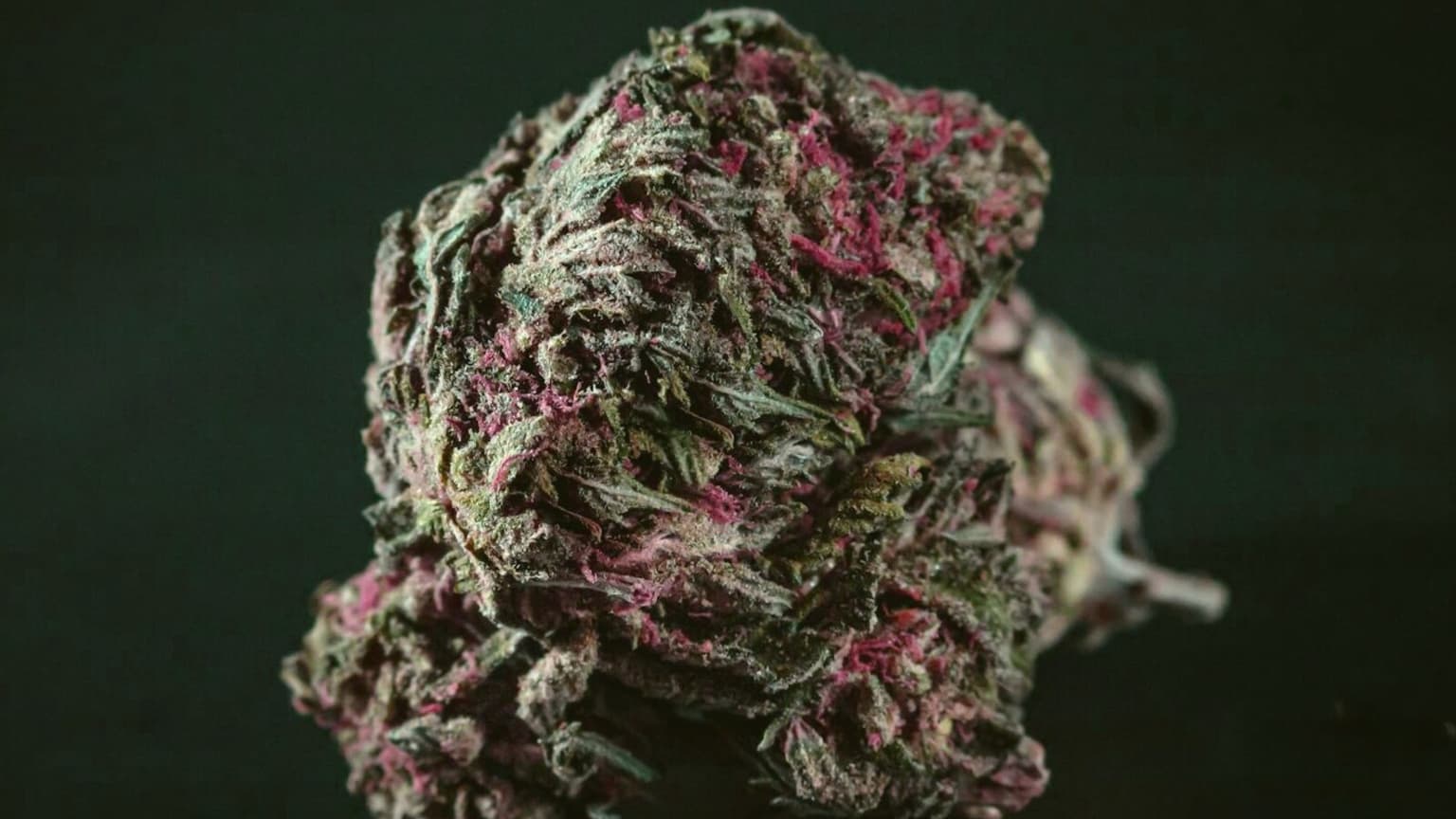
Strain Reviews
Gorilla Glue #4 Deep Dive: Lab Numbers, Real Yields, and What Nobody Tells You About Growing It
14 min read
Strain Reviews
Wedding Cake Strain: Genetics, Real THC Numbers & What It Actually Takes to Grow It Right
14 min read
Strain Reviews
Girl Scout Cookies (GSC) Strain Review: Genetics, Effects & Grow Notes 2026
14 min read