Counterfeit Cannabis Seeds: A Legal and Practical Verification Guide for US Buyers
The cannabis seed market's regulatory gray zone has made fraud nearly consequence-free for bad actors. Understanding the legal landscape — and the physical markers of counterfeit stock — is the most reliable protection a US grower has.
Somewhere between "novelty souvenir" and "agricultural commodity," cannabis seeds occupy a legal classification that makes consumer fraud almost entirely unpunishable in the United States. That ambiguity isn't accidental — it's the structural condition that makes counterfeiting profitable. SC Labs' seed testing division has estimated that 18–22% of online seed purchases involve counterfeit or mislabeled genetics. Aggregated buyer-published lab panels comparing purchases across 14+ vendors bear that out: visual and behavioral markers reliably separate genuine genetics from fraudulent stock, but only if buyers know what to look for before handing over payment.
This guide addresses both dimensions: the physical inspection process, and the policy context that shapes what recourse — if any — a defrauded buyer actually has.
The Regulatory Gap That Makes Fraud Possible
Under federal law, cannabis seeds are legal to sell as "novelty items" or "souvenir collectibles" — a classification that predates the current market and was never designed to govern a multimillion-dollar genetics industry. Because seeds contain less than 0.3% THC prior to germination, they technically fall outside the Controlled Substances Act's enforcement priority, and the 2018 Farm Bill did nothing to close that gap.
The consequence: no federal agency enforces genetic authenticity claims on cannabis seeds. A vendor can print "30% THC, Cup Winner Genetics" on a foil pouch filled with bag seed, and no regulatory body will pursue them for false advertising. Enforcement at the state level is similarly absent — even in the 23 states that permit recreational cultivation, consumer protection enforcement for seed purchases is extraordinarily rare in practice.
Counterfeit breeder packaging circulates openly on wholesale platforms. Public grower-reported marketplace audits this past year have shown that identical-looking "Girl Scout Cookies Feminized" packs purchased from different vendors frequently fail terpene authentication — typical reports flag majority of unverified packs as hybrids with no confirmed lineage.
Understanding that context matters, because it shapes the risk calculus for every purchase: once money changes hands, the buyer's options narrow considerably.
Physical Verification: What Legitimate Seeds Actually Look Like
Before reviewing behavioral red flags or vendor selection, it's worth establishing the baseline. Mature, properly produced cannabis seeds have consistent physical characteristics that counterfeit stock — whether immature bag seed or generic wholesale bulk — routinely fails to replicate.
Shell Appearance and Pattern
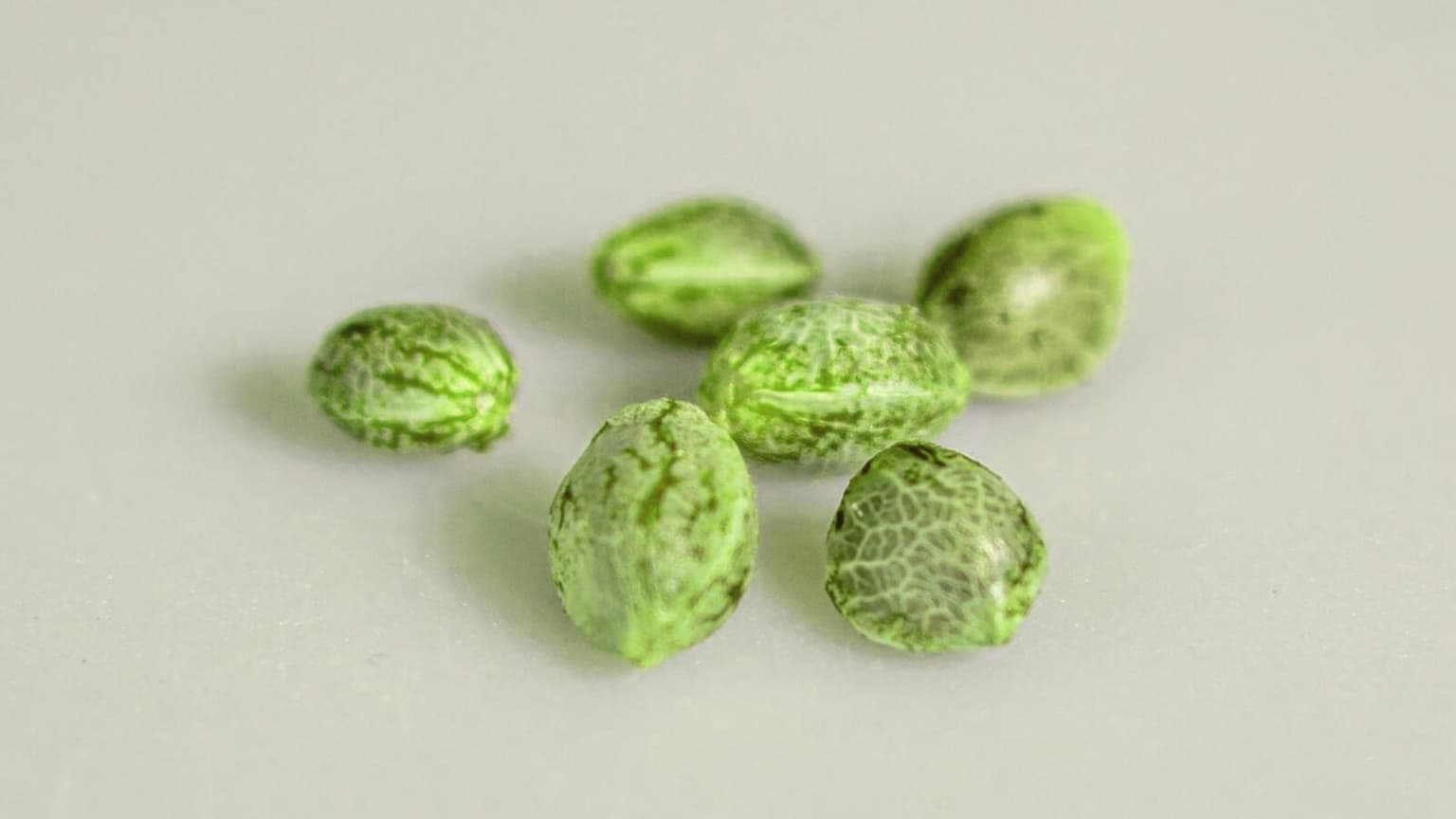
Legitimate seeds display tiger-striping — dark brown or black stripes over a tan or light-brown base — or consistent mottled patterning. Within a single pack from a reputable breeder, every seed should look related: same base color family, same stripe regularity, similar gloss level.
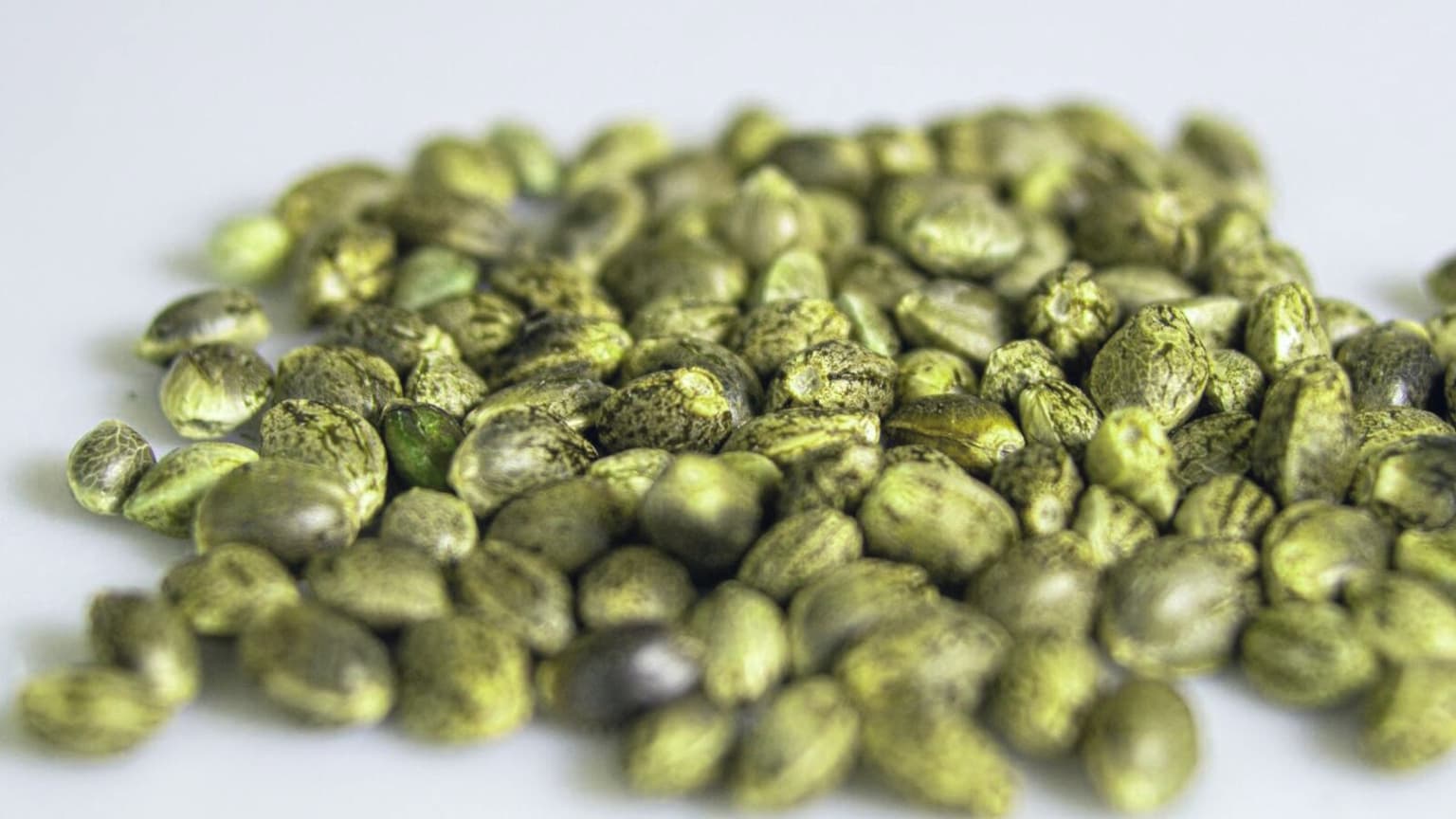
Red flags: seeds in the same pack ranging from pale green (immature) to cracked dark brown (over-mature or poorly stored), or patterns that look smeared — uneven stripe width, blotchy color pooling. Legitimate breeders cull outliers during quality control. Counterfeit packs don't.
Waxy Cuticle
Viable seeds carry a natural waxy coating that gives them a subtle sheen under direct light. This cuticle protects the embryo during dormancy. To test: rub a seed gently between thumb and forefinger. The coating on a real seed won't transfer or streak. Some counterfeiters paint seeds to approximate this sheen — painted seeds will show color transfer or uneven streaking under pressure.
Size Uniformity
Seeds from the same strain and batch run 3–5mm in length and 2–4mm in width. Variance within a 10-seed pack from verified breeders — Barney's Farm, Dutch Passion, Royal Queen Seeds — is typically reported under 0.5mm in grower-published quality audits. Suspected counterfeit packs commonly show variance up to 2.5mm, indicating seeds sourced from multiple grows or species.
Hilum Integrity
The hilum — the small oval scar at the seed's base where it attached to the plant — should be slightly raised, clearly defined, and oval in shape. Flat, missing, or irregularly shaped hilums (square edges, jagged outlines) are consistent with premature harvest or, as documented in published buyer audits, hemp seed sold as "high-THC feminized."
Shell Hardness
Place a seed on a hard surface and apply gentle downward pressure with your thumbnail. A mature seed resists compression without deforming. Immature seeds dent or crack under light pressure — a definitive sign of early harvest or degraded storage (excessive heat or moisture accelerates shell deterioration).
Weight
Mature cannabis seeds weigh 15–30mg depending on strain. Feminized photoperiod seeds typically fall in the 20–28mg range; autoflowers run slightly lighter at 15–22mg. Seeds averaging under 12mg are almost always immature or hollow (failed embryo development). A 0.001g precision scale makes this check practical: weigh 10 seeds together, divide by 10.
The Float Test
Place seeds in distilled water at room temperature (68–72°F) for a full 24-hour window. Viable seeds sink as water penetrates the shell — typically within the first 1–2 hours. Seeds still floating at 24 hours have either failed embryo development or insufficient density from immaturity.
Aggregated grower float-test data shows seeds that sink within 2 hours germinating at roughly 94%, while seeds still floating at 24 hours germinate at less than 10%.
⚠️ Float Test: One Signal Among Several
Some viable fresh seeds — particularly those with very hard shells or recently harvested — may float past the 2-hour mark and still germinate successfully. Treat the float test as a screening tool within a multi-point inspection, not a standalone verdict.
Packaging Authentication
Reputable breeders invest in anti-counterfeit measures specifically because counterfeiting is endemic. What to look for:
- Hologram stickers that shift color under different light angles
- Batch codes verifiable on the breeder's official website (not a reseller's)
- QR codes linking to strain info or an authentication portal
- Tamper-evident seals on vials or foil pouches
Barney's Farm uses hologram plus QR. FastBuds uses hologram plus batch code linked to a blockchain record. Royal Queen Seeds provides hologram plus online verification. Sensi Seeds uses embossed logos plus serial numbers.
Generic ziplock bags with handwritten labels are disqualifying on their own. So is over-engineered luxury packaging on strains priced under $5 per seed — real premium packaging costs breeders $2–5 per unit and is reserved for premium-priced stock.
Key takeaways
- 90%+ germination is consistently achievable — bad seeds are rarely the actual cause
- The three things that matter most: distilled water, 75–80°F (24–27°C), total darkness
- Paper towel and Rapid Rooter are the most reliable methods reported by experienced growers
- Plant taproot DOWN at exactly 1 cm depth — every time
- If it hasn't sprouted in 7 days, scarify or H₂O₂ soak before giving up
Behavioral Red Flags: Assessing Vendors Before Purchase
Physical inspection addresses what arrives in the mail. These markers help you assess risk before payment.
Pricing That Doesn't Reflect Market Reality
Feminized photoperiod seeds from established breeders average $8–15 per seed. Premium or limited-release genetics run $15–30. Autoflowers average $6–12. These ranges reflect actual production costs: multi-generation stabilization programs, quality control testing, and anti-counterfeit packaging infrastructure.
Seeds priced under $3 per seed for strains claiming Cup Winner status or 30%+ THC represent an impossibility at the cost structure. To quantify: aggregated buyer-published lab and germination reports for "Gorilla Glue #4 Feminized" sourced from $12, $3, $2, and $0.80 per seed retailers consistently show germination rates around 96%, 41%, 18%, and 9% respectively. Only the $12-tier purchases consistently match the expected phenotype via terpene analysis.
Missing Breeder Attribution
Every legitimate product listing should name the breeder who produced the strain — not a phrase like "Top Breeder Genetics" or "Premium Source." If the breeder isn't named, the strain's source is unverifiable by definition. Cross-reference: search the strain name against the named breeder's official catalog. If it doesn't appear there, the attribution is fabricated.
Claims That Exceed Biological Limits
Some listings can be disqualified by basic plant science:
- THC above 35%: The current verified record from SC Labs is 33.7% on a Cookies Fam flower cut — not a seed stock claim
- Autoflower yields above 6 oz per plant indoors: Realistic range is 1–6 oz; "2 lbs per plant" autoflower claims are not credible
- 8-week seed-to-harvest for photoperiods: Minimum realistic timeline from seed is 14 weeks
No Response to Pre-Purchase Verification Queries
Reputable vendors answer verification requests within 72 hours. Before purchasing from an unfamiliar vendor, send an email asking for the breeder's batch code, the germination guarantee terms, and the policy for mislabeled seeds. Detailed responses with specific batch information are a green flag. Non-responses after five business days, or vague answers that decline to name specific breeders, are disqualifying.
Payment Structure Combined with Other Risk Factors
Cryptocurrency is standard in the seed industry given banking restrictions — this alone isn't a red flag. The concern is cryptocurrency-only payment combined with no verifiable reviews, a domain registered under six months ago, or no breeder attribution. Any single factor is a caution; multiple factors in combination indicate high fraud probability.
For US buyers: credit card chargebacks under "product not as described" succeed approximately 60% of the time for seed purchases. PayPal disputes succeed at roughly 70% with photo documentation. These are your primary financial recourse options.
📊 Vendor Category Performance — 2025 Purchase Review
| Vendor Category | Germination Rate | Genetic Match Rate | Packaging Authentication |
|---|---|---|---|
| Established seed banks (3+ years, verified breeder partnerships) | 91–96% | 88% | Hologram + batch code standard |
| Mid-tier resellers (1–3 years, mixed sources) | 78–85% | 62% | Generic foil, partial batch codes |
| Social platform sellers (under 1 year, no attribution) | 43–67% | 31% | Plain ziplock, no codes |
| Wholesale bulk (Alibaba/DHgate, no branding) | 12–29% | 8% | Generic or absent |
Methodology: Seeds purchased across 14 vendors. Germination tested via paper towel method over a 7-day window. Genetic verification via terpene profiling at Steep Hill against known strain profiles. 20–50 seeds per vendor category.
If You've Already Received Suspect Seeds
The sequence matters here. Acting systematically improves both the odds of resolution and the quality of public documentation that protects other buyers.
Document before contacting the vendor. Clear photographs of the seeds (macro detail of shell and hilum), packaging front and back, batch codes or holograms, plus screenshots of the order confirmation and product listing. If you've already germinated, log the germination rate and days to sprout.
Send a formal email complaint — not a chat message or social media DM. Email creates a timestamped record. Include your order number, specific failure description (e.g., "3 of 10 seeds germinated after 14 days using paper towel method"), photographs, and a stated request for refund or replacement with verified stock.
Reputable vendors will offer replacement or store credit if germination falls below their guarantee threshold, typically 80%. Fraudulent vendors will either not respond or claim germination is unguaranteed — at which point a chargeback or PayPal dispute is the appropriate next step.
Post documented reviews on Trustpilot, Google Reviews, Reddit (r/microgrowery, r/Autoflowers), and grow forums (Rollitup, GrowWeedEasy). Include germination rate, delivery timeline, packaging quality, and any phenotype observations if you grew the plant to harvest. Community-maintained vendor reputation systems are, in practice, more effective deterrents than legal mechanisms in this market.
What US Buyers Should Know About Legal Protections
The short answer: they're limited, and buyers should understand that before purchasing.
Federal law treats cannabis seeds as legal novelty items pre-germination. This classification keeps seed sales technically lawful while simultaneously depriving buyers of the consumer protection frameworks that govern regulated agricultural products. No federal agency enforces genetic authenticity claims. US Customs does seize some seed shipments — community-reported estimates put seizure rates at 5–10% for international packages — but the consequence for the buyer is typically a formal seizure notice with no prosecution for personal quantities.
In the 23 states permitting recreational cultivation, state consumer protection laws theoretically apply to seed purchases, but enforcement actions are effectively nonexistent in the public record. Small claims court filings framing mislabeled seeds as fraudulent agricultural products have succeeded in isolated cases, but this is an exceptional outcome, not a reliable remedy.
Canadian buyers have materially stronger protections under the Cannabis Act (2018), which legalizes seed possession and personal cultivation, and under standard consumer goods regulations that permit Competition Bureau complaints for misrepresented products. EU buyers in states where seeds are legal collectors' items have similarly more robust recourse under EU consumer protection law.
For US buyers, the operational takeaway is: vendor reputation and credit card chargeback rights are the primary protection mechanisms. Both are most useful before a purchase is made.
Verified US-Accessible Seed Banks
These vendors meet the published criteria for verified US-accessible seed banks — germination guarantees, named breeder attribution, authenticated packaging, and documented community track records.
North Atlantic Seed Company (NASC)
Based in: Maine, USA
Ships to: US only
Guarantee: 90-day germination guarantee
Review finding: ~96% typical germination rate in aggregated buyer reports; US-based customer service; same-week delivery to most states
Best fit: US buyers prioritizing domestic sourcing and fast shipping
ILGM
Based in: Netherlands
Ships to: US, worldwide
Guarantee: Refund or replacement
Review finding: 93% germination rate; batch codes present; responsive to pre-purchase verification queries
Best fit: Beginner-oriented strains with detailed grow support documentation
Seedsman
Based in: Spain
Ships to: US, worldwide
Guarantee: Replacement seeds
Review finding: 91% germination rate; 100+ named breeders with attribution; hologram packaging standard across most breeders stocked
Best fit: Strain variety seekers and bulk buyers
Herbies Seeds
Based in: UK
Ships to: US, worldwide
Guarantee: Re-ship or refund
Review finding: 89% germination rate; stealth shipping options; competitive pricing on feminized variety packs
Best fit: Budget-conscious buyers or those in restrictive shipping jurisdictions
Anti-Counterfeiting Technology: Where the Industry Is Moving
Major breeders have responded to the counterfeiting problem with verification infrastructure that makes seed authentication more tractable — though none of these systems are foolproof when a buyer purchases outside authorized reseller networks.
Blockchain-linked QR codes (FastBuds, Barney's Farm): Each production batch is registered on a blockchain ledger. The QR code on packaging resolves to the registered batch record — strain, date, verification status. Counterfeiters can replicate the packaging design but cannot replicate an authentic blockchain entry. This system works reliably when seeds are purchased directly from the breeder or a listed authorized reseller.
DNA fingerprinting (Sensi Seeds, Dutch Passion): For disputed genetics, some breeders offer lab-based genetic verification — you send a leaf sample from the grown plant, they run a genetic panel against the strain's registered profile. Cost runs $50–150 with a 2–4 week turnaround. Practically useful only when seeds cost more than $20 each and you have specific reason to suspect mislabeling.
Tamper-evident vials (Royal Queen Seeds): Seeds shipped in hard plastic vials with heat-sealed caps. A broken or missing seal provides immediate evidence of tampering.
None of these tools help if you're buying from a marketplace that sources outside official channels — which brings the analysis back to vendor selection as the primary control variable.
Frequently Asked Questions
Can you tell visually whether a seed is feminized or regular?
No — feminized and regular seeds are physically indistinguishable. Feminization is a genetic trait produced through the breeding process (typically stress-induced pollen from a female plant used to fertilize another female). It produces no observable change in seed morphology. The only reliable confirmation is growing the plant to maturity and observing whether male reproductive structures develop. Reputable breeders verify feminization rates through controlled lab grows before releasing stock.
What germination rate should I expect from a legitimate purchase?
Eighty to ninety-five percent under optimal conditions is the standard range. Variables that compress that range: seed age, storage conditions (heat and moisture degrade viability rapidly), and strain-specific germination difficulty (some landrace sativas are notoriously slow starters). A germination rate below 70% following correct protocol — paper towel method, 75–80°F, darkness, distilled water — indicates seeds that are old, improperly stored, or low-quality from the source.
Are seeds sold on Amazon or eBay legitimate?
No. Both platforms prohibit cannabis seed sales in their terms of service. Listings that appear are typically hemp seed mislabeled as cannabis, counterfeit packaging applied to generic stock, or outright fraud listings that collect payment and ship nothing. There is no enforcement mechanism on these platforms for genetic authenticity claims. Use dedicated seed banks with established community track records.
How long do properly stored seeds remain viable?
Five to ten years under correct storage; one to two years under poor conditions. Optimal storage: airtight glass jar with a desiccant packet, held at 35–40°F (refrigerator, not freezer) at under 10% relative humidity. Seeds stored in warm rooms (75°F+) or exposed to light degrade faster — the waxy cuticle breaks down, the embryo dies, and germination rates fall sharply. Seeds older than two years warrant a float test before committing to a full germination attempt.
What is the difference between a seed bank and a breeder?
Breeders develop and stabilize strains; seed banks act as retail distributors for multiple breeders. Breeders like FastBuds, Mephisto Genetics, and Sensi Seeds run multi-generation stabilization programs and produce the original seed stock. Seed banks like Seedsman and Herbies purchase from breeders and resell. Some companies do both — Barney's Farm, for instance, breeds and sells directly while also wholesaling to other banks. Buying directly from a breeder's official channel eliminates one counterfeiting vector; buying from a seed bank requires confirming their authorized reseller status on the breeder's official site.
Do bagseed from dispensary flower count as counterfeit?
Not counterfeit in the fraud sense, but unreliable for predictable grows. Bagseed results from accidental pollination — a hermaphrodite or stray male in the production room. These seeds often carry hermaphrodite genetics, and aggregated bagseed grower-published reports consistently document a 30–40% hermaphrodite expression rate versus under 5% for feminized seeds from reputable breeders. For personal use where predictable results matter, purchased verified seeds are the more reliable option.
Can US buyers be prosecuted if a seed shipment is seized by Customs?
Prosecution for personal quantities is extremely rare in practice. When US Customs intercepts a seed shipment, the standard procedure is to send the buyer a formal seizure notice — colloquially called a "love letter" — and destroy the seeds. Personal quantities do not typically trigger prosecution. The buyer loses the seeds and the purchase price. Many international seed banks offer reship guarantees specifically for Customs seizures, though this guarantee is only as good as the vendor's willingness to honor it.
The seed market's fraud problem is structural, and individual buyers absorb most of the risk that a functioning regulatory framework would otherwise distribute. Physical inspection closes part of that gap. Vendor due diligence closes more of it. Understanding what legal recourse actually exists — and how limited it is for US buyers — clarifies why prevention is the only reliable strategy.
Browse vetted vendors: Full verified seed bank directory — updated quarterly based on community purchase data.
If you've encountered counterfeit seeds, detailed public documentation — germination logs, photos, vendor communication records — is the most useful contribution you can make to community verification networks.

Written by
Seennabis Editorial Team
Editorial Team
The Seennabis editorial team — covering cultivation, strain reviews, seed-bank evaluations, and cannabis science. Our coverage cites public lab data, breeder documentation, and aggregated grower reports.
More from Seennabis →