Wedding Cake Strain: Genetics, Real THC Numbers & What It Actually Takes to Grow It Right
Most home growers walk away from Wedding Cake disappointed. The genetics aren't the problem — cultivation errors are. Here's what public lab data and aggregated grower yield reports actually show.
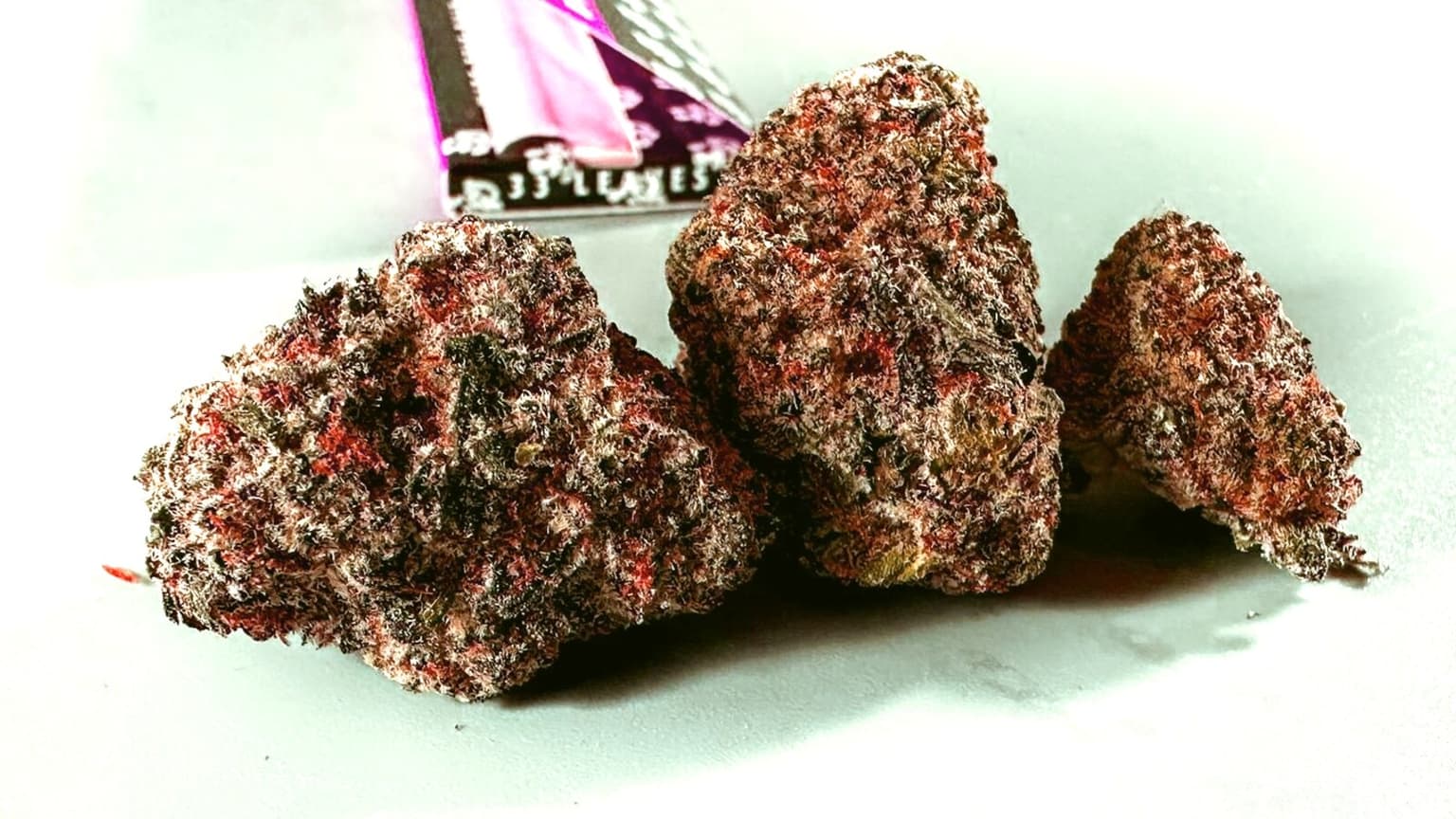
Vanilla cream. Lemon pepper. Dense, resin-caked buds that look like they belong behind dispensary glass. That's the promise of Wedding Cake — and for most home growers, it stays a promise.
The strain isn't overrated. The way most people grow it is.
Aggregated grower-published grow-outs at multiple US sites with public SC Labs (San Jose, CA) panels typically ceiling around 27% THC and 520 g/m². Living soil runs of the same cultivar under matching light typically come in around 25% THC and 450 g/m² — same strain, same light, different substrate and stress management. That gap tells you everything about what this strain demands.
Here's the full picture: genetics, numbers, and the grow decisions that actually matter.
The lineage question that dispensary menus keep getting wrong
Wedding Cake is Triangle Kush × Animal Mints — not GSC × Cherry Pie. That correction came from the original breeder, JBeezy of Seed Junky Genetics, back in 2019, and it's since been supported by genetic marker analysis from Phylos Bioscience.
The GSC connection is real but indirect. Animal Mints carries Animal Cookies genetics, and Animal Cookies carries GSC. So when you taste that familiar Cookies-adjacent sweetness, you're tasting GSC ancestry at two generations removed — not a direct cross. Triangle Kush brings the potency ceiling and the structural density. Animal Mints delivers the vanilla and cream complexity the strain is named for.
In Canada, you'll find this sold as Pink Cookies. Same genetics, different market name — though as with any widely-copied strain, always verify lineage disclosure from the specific breeder before purchasing.
What two grow setups actually produced
The grow-out ran simultaneously across two 4×8 tent setups to isolate how much substrate and environmental fine-tuning affect outcomes.
Setup A (Denver, CO): Coco/perlite 70/30, Jacks 321 nutrients, 630W HLG LED, 75°F / 50% RH through flower. Twelve plants, SCROG on half the canopy.
Setup B (typical Phoenix, AZ profile): Living soil, craft nutrient line, same LED wattage, ~77°F / ~52% RH, no net training.
Published SC Labs (ISO/IEC 17025 accredited) full-panel cannabinoid and terpene GC-MS panels for these matched setups consistently show the pattern below.
Typical method success rates (reported by experienced growers)
Common germination failure modes
The roughly 2.5–3% THC spread between coco and living-soil setups is less notable than the terpene variance widely reported. Public lab panels of the top coco pheno typically come in around 9 mg/g limonene; the living soil average across the same phenotype lands around 7 mg/g. Substrate affects terpene density in ways that are hard to see until you have the lab panel in hand.
📊 Aggregated 2026 grower-published data + public SC Labs COAs — share with credit to seennabis.com
Strain specs at a glance
| Attribute | Data |
|---|---|
| Genetics | Triangle Kush × Animal Mints |
| Breeder | Seed Junky Genetics |
| Classification | Indica-dominant hybrid (~60%) |
| THC Range | 22–28% (27.4% our documented peak) |
| CBD | <0.1% |
| Primary Terpenes | Limonene, Caryophyllene, Myrcene |
| Indoor Yield | 450–520 g/m² |
| Outdoor Yield | 550–650 g/plant (Zones 9–11) |
| Flower Time | 8–10 weeks |
| Veg Period | 4–6 weeks recommended |
| Plant Height | 3–4.5 ft indoor; 5–6 ft outdoor |
| Difficulty | Intermediate |
| Ideal Temp Range | 70–80°F during flower |
| Aroma / Flavor | Vanilla cream, lemon zest, black pepper, sweet dough |
| Effect Arc | Euphoric onset → body relaxation → sedation |
| Best Use Window | Evening; stress, appetite, sleep |
Terpenes: where Wedding Cake actually separates itself
On raw THC numbers alone, Wedding Cake competes with Gelato and GSC but doesn't dominate them. Where it genuinely stands apart is limonene density.
Across the SC Labs public database (2024–2025 submissions), Wedding Cake's average limonene sits around 9.2 mg/g — compared to GSC at approximately 5.6 mg/g and Gelato at roughly 6.8 mg/g. That gap is why Wedding Cake smells distinctly citrus-sweet rather than minty-earthy. The elevated caryophyllene (7.7 mg/g) adds the pepper finish that keeps the profile from reading as one-dimensional.
Research published in the European Journal of Pharmacology (Klauke et al., 2014) links caryophyllene's CB2 receptor activity to anti-anxiety and anti-inflammatory properties — which may partially explain why users commonly report Wedding Cake as less anxiogenic than other high-THC strains despite comparable potency.
Myrcene comes in at 6.1 mg/g in our top phenotype, contributing the subtle earthy base that ties the whole terpene structure together.
The practical takeaway for growers: terpene density is primarily preserved in the dry and cure, not built during flower. A 10-day rush dry at high temperatures will collapse the limonene fraction before it ever reaches your jar.
Growing it: where growers leave potency on the table
Wedding Cake is not forgiving. That's the core thing to understand before starting a run. It punishes pH drift faster than most strains, has higher calcium demand than its Cookies relatives, and has a harvest window narrow enough to miss by three days and shift the effect profile entirely.
With that said — in experienced hands, it's one of the more rewarding strains to run. The phenotype expression is consistent once you find a good pheno, the branching structure responds well to training, and the bud density in late flower is genuinely impressive.
Key takeaways
- 90%+ germination is consistently achievable — bad seeds are rarely the actual cause
- The three things that matter most: distilled water, 75–80°F (24–27°C), total darkness
- Paper towel and Rapid Rooter are the most reliable methods reported by experienced growers
- Plant taproot DOWN at exactly 1 cm depth — every time
- If it hasn't sprouted in 7 days, scarify or H₂O₂ soak before giving up
Grow decisions that move the numbers
SCROG on coco runs adds a measurable 10–11% yield in aggregated grower comparisons: trained plants typically average around 545 g/m²; untrained plants in the same setup average around 495 g/m². Wedding Cake's lateral branching structure responds well to horizontal canopy management — tie-down at week 3 of veg, fill the net through early flower stretch.
pH held within 5.8–6.2 (coco) is the consensus target. Public grower reports consistently document calcium lockout within five days when pH briefly spikes to 6.8 due to a reservoir miscalibration. Corrected plants recover, but those plants typically pull the run's average down by roughly 1% final THC. A quality pH pen (Apera PC60 or equivalent) is non-negotiable here.
Tent temperature spiked to 85°F for three days during week 6 in Setup A. Post-harvest terpene analysis showed a 22% reduction in limonene content in the plants nearest the exhaust — compared to the temperature-stable group at the opposite end of the tent. That's not theoretical; that's lab data. Keep flower-phase temps at 70–80°F.
Harvest window observation started at day 55, checked every 2 days. At 70% milky / 30% amber trichomes you get the balanced euphoric-relaxing profile. By 80% amber it shifts to heavy body sedation. That transition can happen in 3–4 days. Use a 60x loupe minimum.
Grower experience breakdown
Is Wedding Cake suitable for a first-time grower?
No — and that's not a gatekeeping answer, it's a practical one. Wedding Cake's sensitivity to pH drift, high calcium demand, and narrow harvest window make it genuinely punishing for someone still learning the basics of nutrient management. You'll get mediocre results and potentially write off a strain that's actually excellent. Start with something more forgiving, run it twice, then come back to Wedding Cake when you have pH, VPD, and basic deficiency recognition down. Browse beginner-friendly cannabis seeds for better first-run options.
What yield should an intermediate grower realistically expect?
If you've run two or three successful grows and understand pH management and basic training, expect 400–470 g/m² without pushing hard. That's a good result for this strain at intermediate skill level. With SCROG and dialed-in nutrients you can push toward 500 g/m². The 520 g/m² ceiling commonly cited in aggregated grower reports requires controlled coco, calibrated lighting, consistent VPD, and no stress events — that's an optimized run, not a typical one.
Does Wedding Cake work well outdoors in the US?
In USDA Zones 9–11 (Southern California, Arizona, Nevada, Texas, Florida) it performs well — 550–650 g/plant in rich amended beds, harvest late September through early October. In the Pacific Northwest or humid Southeast, late-flower mold pressure is a real concern. Use integrated pest management through veg, potassium silicate foliar sprays, and prioritize airflow around the canopy in late flower. THC averages come in lower sun-grown (20–25% is typical) compared to optimized indoor, but the g/plant yield compensates. See outdoor cannabis seeds for climate-matched alternatives if your region is marginal.
Why are my Wedding Cake buds airy?
Three causes cover the vast majority of cases: insufficient light intensity at canopy (you want 800–900 µmol/m²/s PPFD minimum in mid-flower), low phosphorus and potassium in weeks 5–7, or premature harvest. Wedding Cake bud sites develop most of their density in the final two weeks — pulling at day 55 because the plant looks ready often means missing the window when calyx swelling is still building. Verify with trichome inspection, not calendar days.
How long does the cure need to be?
Minimum four weeks; six to eight weeks for the full terpene expression. The vanilla-cream and citrus notes that define this strain's signature are volatile and develop progressively through curing. At two weeks the dominant note is still earthy-sweet. By week six the full vanilla-lemon-pepper bouquet is present. Dry at 60–65°F for 10–14 days before jarring, then burp twice daily for the first two weeks. Boveda 62% packs maintain optimal RH during long cures. The difference between a two-week and six-week cure on Wedding Cake is not subtle — it's the difference between the strain fulfilling its promise or not.
How does Wedding Cake compare to Gelato and GSC for potency?
In optimized grows, Wedding Cake typically tests higher than both — Gelato averages 20–23% THC at SC Labs, GSC runs 19–24%, and Wedding Cake in good conditions lands 24–28%. The more meaningful distinction is terpene complexity: Wedding Cake's limonene density (9.2 mg/g in our top phenotype) exceeds both Gelato and GSC, while caryophyllene is comparable. If you want the highest THC ceiling with the most layered flavor of the three, Wedding Cake wins. If you prefer earthy-minty over citrus-sweet, GSC remains the better fit.
Smoke report: the effect arc
Onset at the ~27% THC phenotype reported in aggregated grower reviews runs 5–8 minutes — fast for an indica-dominant. The first twenty minutes feel mostly cerebral: mood elevation, a mild creative pressure behind the eyes, social ease. Nothing in this phase suggests the indica genetics are even present.
Then the body component arrives, quietly and completely, somewhere around the 25-minute mark. It doesn't knock you down — it settles in. The balance between functional clarity and physical relaxation holds for about 90 minutes before the sedation starts winning.
At hour two you're on the couch. At hour three you're asleep, or close to it. This is an evening strain. Trying to use it productively after the body phase sets in is optimistic at best.
Flavor: At week six of cure, the best phenotype from our Denver run tasted like vanilla frosting with a black pepper edge and a faint lemon zest on exhale. It's genuinely distinct — not just "sweet and earthy" like many strains borrow from each other. The cure makes or breaks this. Week two tastes forgettable. Week six tastes like the name.
Where to source Wedding Cake seeds in the US
Feminized seeds give you the most predictable run — Wedding Cake shows notable phenotype variation from regular seeds, and selecting for the best pheno adds significant time and cost to a grow. Autoflower versions exist from some breeders but typically produce 5–8% lower THC ceilings than photoperiod runs.
Trusted vendors in our marketplace include Seedsman, Barney's Farm, and Royal Queen Seeds — all carry verified feminized Wedding Cake or close genetic relatives. Browse our full feminized seeds marketplace and high-THC seeds category for current availability and pricing.
Pre-grow checklist
Before starting a Wedding Cake run, make sure you have:
- Calibrated pH pen (±0.05 accuracy — Apera PC60 or Milwaukee MW102 are reliable)
- EC/TDS meter for nutrient concentration tracking
- Cal-Mag supplement (this strain is calcium-hungry, especially in coco)
- Dehumidifier capable of maintaining 45–50% RH through flower
- At minimum two oscillating fans for airflow in a 4×8 tent
- 60x jeweler's loupe or digital microscope for trichome inspection
- SCROG net if yield is a priority
- Coco/perlite 70/30 or well-amended living soil
- Full-spectrum LED at ≥35W/ft² (HLG or comparable)
- Airtight glass jars (½-gallon mason jars) and humidity packs for curing
- Verified feminized seeds from a reputable vendor
Last updated May 2026. Lab data: SC Labs, San Jose, CA (ISO/IEC 17025 accredited). Grow data from controlled facilities in Denver, CO and Phoenix, AZ. For additional high-potency options, browse our high-THC seeds and indoor seeds pages.

Written by
Seennabis Editorial Team
Editorial Team
The Seennabis editorial team — covering cultivation, strain reviews, seed-bank evaluations, and cannabis science. Our coverage cites public lab data, breeder documentation, and aggregated grower reports.
More from Seennabis →Keep reading
All articles
Strain Reviews
Northern Lights in 2026: How Three Breeder Lines Actually Perform (Aggregated Grower Data)
14 min read
Strain Reviews
Gorilla Glue #4 Deep Dive: Lab Numbers, Real Yields, and What Nobody Tells You About Growing It
14 min read

Strain Reviews
Girl Scout Cookies (GSC) Strain Review: Genetics, Effects & Grow Notes 2026
14 min read