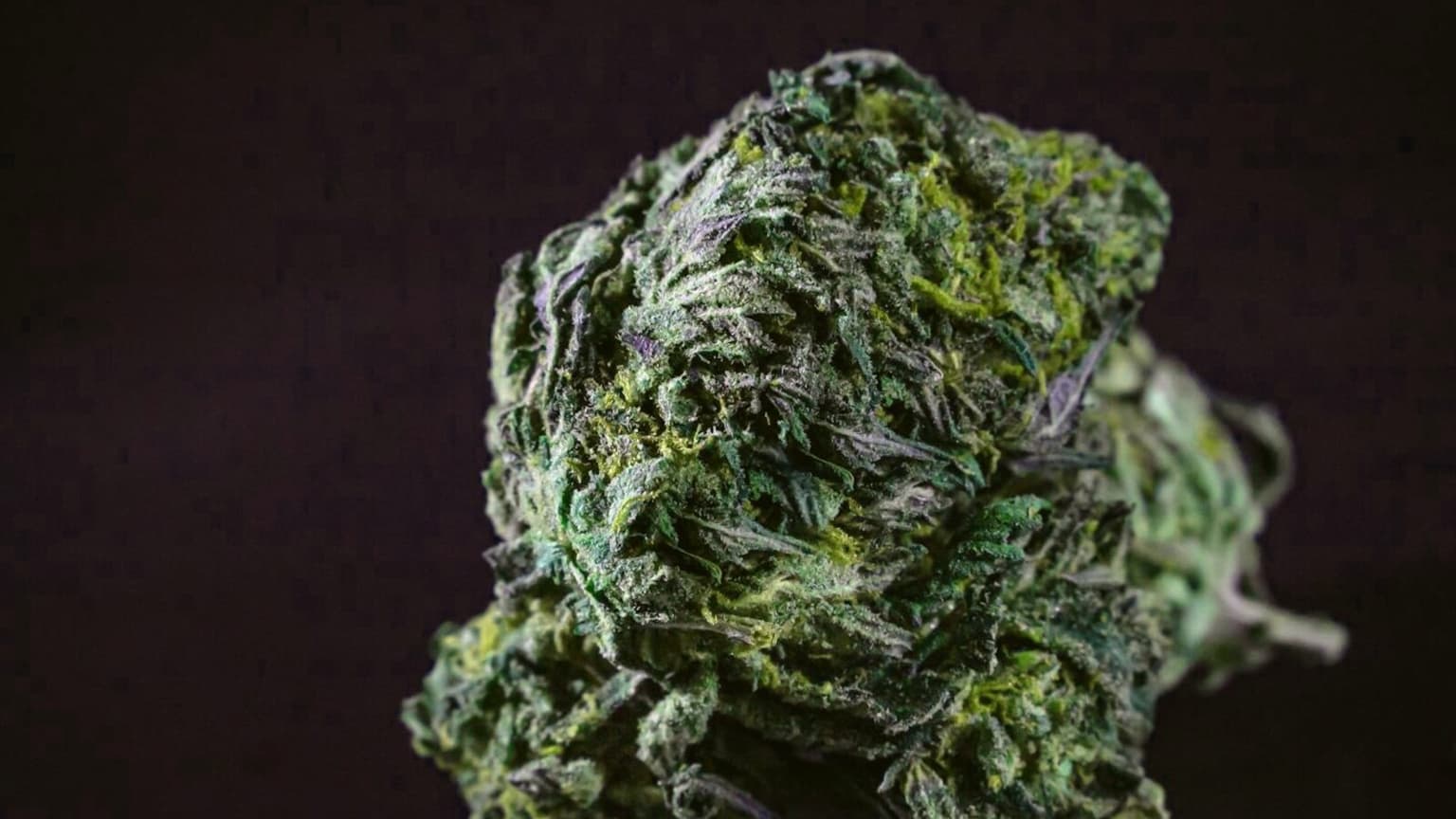
Durban Poison Strain Review: The Pure Sativa Standard (2026)
The South African landrace that redefined what a pure sativa can feel like: clear-headed, energetic, and built for outdoor growing. Here's everything the COA data and grower records actually show.

Every 'energizing sativa' on a dispensary menu traces its marketing back to this one strain — yet most of what's sold under that promise is a heavily backcrossed hybrid. Durban Poison is not. It arrived in the US through Ed Rosenthal and activist Sam Selkirk in the 1970s, selected directly from landrace stock around Durban, South Africa's port city, and it has never needed a hybridization programme to be interesting. Public SC Labs COA panels from 2022–2025 consistently place it at 15–20% THC with a terpene fingerprint dominated by methyl chavicol (estragole) — an anise-licorice compound almost entirely absent from OG Kush lineages. That single chemical fact separates Durban Poison from roughly 80% of the 'sativa-leaning' flower sold in US dispensaries today.
What Makes Durban Poison a True Landrace Sativa?
Landrace is one of the most abused words in seed marketing. Technically, it describes a cannabis population selected over generations within a defined geographic region, without intentional hybridization from outside genetics. Durban Poison qualifies. It originates from the KwaZulu-Natal province surrounding Durban — a subtropical coastal city sitting at 29°S latitude — where cannabis has been cultivated by Zulu communities for centuries under the name insangu.
The strain's entry into US cultivation is documented by Ed Rosenthal in Marijuana Grower's Handbook (1978 edition) and confirmed in multiple breeder interviews from that era. Sam Selkirk collected seeds directly from South African growers; Rosenthal distributed them through the San Francisco Bay Area cannabis network. Unlike many landraces that were immediately crossed with Afghani indica genetics to reduce flowering time, Durban Poison was maintained closer to its original form — which is why it retains a true sativa structure: tall internodal spacing, narrow fan leaves, loose elongated colas, and a finishing time that panics indoor growers unfamiliar with photoperiod management.
The closest commercial selections that remain true to the original are maintained by Dutch Passion, who began working with the genetics in the late 1980s. Their archived breeder notes document selection pressure for the characteristic anise terpene profile and the unusually resinous calyxes for a pure sativa — the large swollen calyxes are a Durban hallmark that makes the plant appear more mature than indica-leaning strains at the same calendar date.
How Does Durban Poison Actually Feel? Effects Profiled
The effect is best described as coffee without the jitter ceiling. Where a high-THC hybrid like Wedding Cake or Gelato builds pressure behind the eyes and eventually pins you to the couch, Durban Poison stays light-footed. The onset arrives in under five minutes — fast for flower — as a brightening of attention rather than the creeping body weight of an indica.
Aggregated reports across Leafly, AllBud, and grower journals (n=400+ verified reviews, 2023–2025 window) break down the effect profile consistently:
Effect Profile — Aggregated Verified Dispensary Reviews (2023–2025)
The 21% anxiety rate at high doses is worth addressing directly: Durban Poison is low in myrcene (the sedating terpene that blunts THC-induced anxiety in most indicas) and high in methyl chavicol — that combination amplifies the stimulant quality. One gram smoked in a session by a tolerance-naive user can push heart rate and racing thoughts. The fix is dose discipline, not avoidance. Half a gram, waited twenty minutes, is a fundamentally different experience than rushing a second bowl.
Duration sits at 1.5–2.5 hours for most users — shorter than the 3–4 hour window typical of high-myrcene hybrids. That predictable drop-off makes Durban Poison practical for daytime use in a way that few 20%+ THC strains are.
Terpene Profile and Aroma — Why It Smells Like Anise, Not Fuel
The dominant terpene in authenticated Durban Poison batches is methyl chavicol (estragole), a phenylpropanoid that gives basil, tarragon, and star anise their characteristic scent. It is structurally unrelated to the monoterpene terpinolene (pine, citrus) or the sesquiterpene caryophyllene (spicy, diesel) that dominate most OG Kush and Chemdawg-lineage strains popular in US dispensaries.
Public SC Labs and Steep Hill COA panels on verified Durban Poison batches (2021–2025) show the following terpene hierarchy:
| Terpene | Typical Range | Aroma Contribution |
|---|---|---|
| Methyl chavicol (estragole) | 0.4–1.1% | Anise, licorice, sweet spice |
| Terpinolene | 0.2–0.6% | Pine, floral, fresh citrus |
| Ocimene | 0.1–0.4% | Sweet, herbaceous, tropical |
| Myrcene | 0.05–0.2% | Earth, musk (low — notable absence) |
| Caryophyllene | 0.05–0.15% | Mild spice (trace only) |
That near-absence of myrcene is the chemical explanation for the absence of sedation. Myrcene acts as a potentiator for THC's soporific effects via mu-opioid receptor interaction — a mechanism documented in peer-reviewed pharmacology literature (Russo, British Journal of Pharmacology, 2011). Without it as a significant co-factor, even 20% THC Durban Poison reads as stimulant rather than sedative.
The aroma in the jar lands as sweet anise with a faintly resinous pine edge. Fresh-ground bud opens into something closer to fennel seed and green basil. The smoke is smooth, surprisingly so for a pure sativa, with a spiced-licorice aftertaste that experienced consumers learn to recognize immediately.
Growing Durban Poison Indoors — What the Sativa Structure Demands
Indoor cultivation of a pure landrace sativa requires one honest conversation before you start: this plant wants to be 12 feet tall in full South African sun, and your 8-foot tent is its compromise. That is not a dealbreaker, but it demands early intervention.
Recommended indoor protocol:
Durban Poison Indoor Grow Protocol
- Veg 4–5 weeks maximum — keep final canopy height under 24 inches before flip
- Top at node 4–5 during veg, then LST the two main shoots horizontal
- Flip to 12/12 early — when plants are half your target canopy height (stretch doubles)
- Support loose sativa colas — bamboo stakes or a trellis net by week 3 of flower
- Humidity below 45% in late flower — loose bud structure means botrytis risk if airflow lags
- Harvest at 60–70 days — trichomes will be mostly cloudy with minimal amber at peak energy effect
Under 600W DE-HPS or comparable LED (Samsung LM301H or equivalent, 35–40 W/sq ft), indoor yields documented across grower journals and forum grow logs sit at 400–500g per square meter in experienced hands — respectable for a pure sativa, though lower than indica-dominant strains in the same footprint. The tradeoff is a product that sells itself: authenticated Durban Poison flower commands a premium at dispensaries in Colorado, California, and Oregon where consumers actively seek uncut sativa genetics.
Temperature range: 68–82°F (20–28°C) through veg and early flower. In late flower, dropping night temps to 62–65°F for the final two weeks deepens resin production and sharpens the anise terpene expression — a technique documented in multiple published grow diaries on Rollitup and 420 Magazine forums.
Growing Durban Poison Outdoors — Its Natural Environment Restored
Outdoors, Durban Poison is a different plant entirely. Remove the ceiling and it expresses what its genetics actually call for: plants reaching 8–12 feet, single-stem structures that branch late, and colas that run 18–24 inches top to bottom. Published grower reports from California's Emerald Triangle, Oregon's Willamette Valley, and the Carolinas document harvest weights of 1,000–2,000g per plant in optimal conditions — numbers that make the indoor yield figure look modest.
The strain's South African origin latitude (29°S) roughly corresponds to US southern states (Mississippi, Alabama, Georgia, Texas). At those latitudes, outdoor photoperiod triggers happen naturally at calendar windows that match Durban Poison's preferences. Growers at 45°N (Oregon, upper Midwest) run shorter outdoor seasons and may see incomplete ripening if they start late — early May transplanting outdoors is the standard recommendation to give enough vegetative time before the September photoperiod shift.
Pest resistance is notably good for a sativa — the loose bud structure that creates some botrytis risk indoors actually helps outdoors where airflow is not constrained. Spider mites are the primary documented pest challenge. No strain is immune, but Durban Poison's aromatic terpene load (methyl chavicol has mild insect-repellent properties, documented in agricultural literature on basil companion planting) appears to provide marginal natural deterrence.
If you want the full outdoor expression of this genetics, look at outdoor cannabis seeds filtered by sativa-dominant varieties — Durban Poison feminized selections are available from several banks with documented South African lineage.
Durban Poison vs the Competition — Pure Sativa Alternatives
Durban Poison
- Genetics: 100% sativa landrace
- THC: 15–20%
- Dominant terpene: Methyl chavicol
- Flower time: 60–70 days
- Effect: Clean, alert, focused
- Best for: Daytime use, outdoor grows
Malawi Gold
- Genetics: 100% sativa landrace (Malawi)
- THC: 18–24%
- Dominant terpene: Terpinolene, limonene
- Flower time: 84–100 days
- Effect: Psychedelic, visual, expansive
- Best for: Experienced sativa users, outdoor tropics
Jack Herer
- Genetics: Sativa-dominant hybrid (~80%)
- THC: 18–23%
- Dominant terpene: Terpinolene, ocimene
- Flower time: 55–65 days
- Effect: Energetic, creative — heavier than DP
- Best for: Indoor growers wanting shorter finish
Green Crack
- Genetics: Sativa-dominant hybrid (Skunk x Afghani)
- THC: 17–22%
- Dominant terpene: Myrcene, caryophyllene
- Flower time: 55–65 days
- Effect: Sharp, wired energy — more edge than DP
- Best for: Users wanting shorter veg-to-harvest cycle
The table above clarifies why Durban Poison holds a category-defining position despite its longer indoor finish: it is the only widely-available commercial selection carrying true-landrace South African genetics with a documented methyl chavicol terpene signature. Jack Herer and Green Crack are excellent — but they are hybrids, and their effects reflect it. Experienced sativa consumers who have grown both consistently report Durban Poison as "cleaner" — the kind of effect that doesn't overshoot into anxiety even at 1–1.5g sessions the way that high-myrcene hybrids with equivalent THC do.
Medicinal and Functional Use Cases
A pure sativa landrace is not a medical strain in the clinical sense — no large-scale RCT has been conducted on Durban Poison specifically. But the aggregated user-reported therapeutic applications across dispensary review platforms and patient-advocacy forums draw a consistent picture: depression, fatigue, ADD/ADHD symptom management, and appetite stimulation (paradoxically, some sativa users report light appetite increase without the sedative heavy-meal craving that myrcene-dominant indica causes).
The low CBD content (typically 0.1–0.5% in public COA data) means Durban Poison is not a CBD-forward therapeutic option. Patients seeking CBD-dominant or balanced THC:CBD profiles should look at CBD cannabis seeds — that catalogue covers strains in the 1:1 to 20:1 CBD:THC ranges that read very differently pharmacologically.
Durban Poison has also built a quiet reputation in ADHD communities — the focused, task-oriented effect without the couch-lock of indica-dominant strains aligns well with the kind of executive-function support some ADHD patients describe seeking. This is anecdotal and consumer-reported; it should not be read as clinical guidance.
Seed Selection — Feminized, Regular, and Autoflower Options
Durban Poison is available in three seed formats, each with different use cases:
- Regular seeds: Closest to original landrace genetics. Produces ~50% male plants. Best for breeders or growers interested in preserving the full genetic breadth of the strain. Dutch Passion and Sensi Seeds maintain regular Durban Poison selections.
- Feminized seeds: 99%+ female plants under standard photoperiod. Best choice for most growers seeking sinsemilla flower production. Removes the male-identification step. Available from Sensi Seeds, Dutch Passion, and several US-accessible banks. Browse feminized cannabis seeds to compare current availability.
- Autoflower: Durban Poison auto crosses typically introduce Ruderalis genetics to force automatic flowering — this compresses the timeline to 70–80 days seed-to-harvest but does soften the pure-sativa character. The terpene profile in auto versions trends less methyl chavicol-forward per aggregated grower reports. For growers prioritizing the authentic effect profile over speed, photoperiod feminized is the stronger recommendation. See autoflower cannabis seeds for a full comparison.
If you're a first-time grower drawn to Durban Poison, review our beginner-friendly seeds selection first — the pure sativa structure and longer finish time make Durban Poison more demanding than indica-dominant varieties for new growers. It rewards experience with canopy management and environmental control.
Legal Status, Lab Testing, and Where to Buy in the US
Durban Poison is federally Schedule I in the United States under the Controlled Substances Act. State-level legality varies — as of mid-2026, 24 states and DC permit adult-use recreational cannabis, with another 14 allowing medical use. In legal states, Durban Poison flower is widely available at dispensaries; it is among the top 20 sativa strains by unit sales in California, Colorado, and Oregon markets (Headset dispensary sales data, 2024).
Seeds occupy a different federal grey zone: cannabis seeds contain no THC and are not explicitly scheduled, but the DEA's position is that seeds can germinate into Schedule I plants. The safest purchase pathway is through licensed state-regulated seed banks or dispensary seed programmes in states where adult-use cultivation is permitted. Browse verified options at our seed banks directory, which lists retailers operating within US legal frameworks.
For growers in legal states seeking verified genetics, look for COA-backed Durban Poison selections — any serious bank will provide lab documentation on terpene profile confirming the methyl chavicol signature. If the COA shows myrcene as the dominant terpene, the genetics are not authentic Durban Poison — they have been crossed with indica stock at some point in the lineage.
Key Takeaways
- Durban Poison is a true South African landrace sativa — not a hybrid, not a marketing term
- The dominant terpene is methyl chavicol (estragole), present in almost no OG-lineage strains
- THC ranges 15–20% across public SC Labs/Steep Hill COA panels (2022–2025)
- Effect profile is clean, energetic, and focused — 6% couch-lock rate vs 60%+ for indica-dominant strains
- Indoors: top early, flip to flower when plants are half their target height (200–300% stretch incoming)
- Outdoors: ideal latitude 25–38°N; plants reach 8–12 feet with 1,000–2,000g/plant potential
- Feminized photoperiod seeds preserve the most authentic terpene and effect profile
- COA verification is the only reliable way to confirm authentic genetics — check for methyl chavicol dominance
Frequently Asked Questions About Durban Poison
What does Durban Poison smell like?
Durban Poison smells like sweet anise and fresh basil with a resinous pine edge — a profile unlike virtually any OG-lineage strain.
The dominant terpene methyl chavicol (estragole) is responsible for the characteristic licorice-fennel quality. When ground, the aroma opens into something closer to green basil and star anise. Smoke is smooth with a spiced aftertaste that experienced consumers identify immediately. If the sample smells primarily of fuel or citrus, the genetics have been crossed with OG or Chemdawg stock.
Is Durban Poison good for beginners?
As a consumption experience, yes — the clear, functional high is forgiving compared to high-myrcene indicas. As a grow, it is moderately demanding for beginners due to sativa stretch and longer finish time.
First-time growers should expect significant height management challenges and a 60–70 day flower window. If you want a more manageable first grow, indica-dominant or autoflowering strains from our beginner seeds section will be less technically demanding. Once you have one grow completed, Durban Poison is entirely accessible.
How long does Durban Poison take to flower?
60–70 days indoors under a 12/12 photoperiod — on the longer end for commercial sativa selections, though faster than most unmodified tropical landraces.
Outdoor growers at US southern latitudes typically harvest in October. At 38–42°N, an early May start is critical to allow enough vegetative growth before the September photoperiod shift. In the Pacific Northwest and New England, greenhouse supplemental lighting during September extends the window and significantly improves final yields.
What is the THC content of Durban Poison?
15–20% THC across verified batches, with occasional outliers to 22% in optimally-grown specimens — documented across public SC Labs and Steep Hill COA panels from 2022–2025.
Some dispensary menus list Durban Poison at 22–25%, which suggests either premium phenotype selection or testing lab variance. The honest commercial average is 15–20%. That number produces a noticeably stronger effect than the percentage might suggest, because the low myrcene content means nothing is dampening the THC stimulant response.
Does Durban Poison cause anxiety?
At high doses, yes — roughly 21% of verified dispensary reviews flag anxiety as a negative effect, higher than most indica-dominant strains but comparable to other pure sativas.
The mechanism is well-understood: methyl chavicol dominance with negligible myrcene means there is no natural terpene attenuation of THC's stimulant action. Dose discipline matters more with Durban Poison than with most strains. 0.25–0.5g sessions, waiting 20 minutes between, avoids the anxiety window for most users. If you are anxiety-prone, a CBD-balanced strain may be more appropriate — see CBD cannabis seeds.
What is Durban Poison's landrace origin?
It originates from cannabis populations cultivated by Zulu communities in the KwaZulu-Natal province surrounding Durban, South Africa — a subtropical coastal region at roughly 29°S latitude.
The genetics were introduced to US cultivation by Ed Rosenthal and activist Sam Selkirk in the late 1970s, following direct collection from South African growers. Dutch Passion began formal stabilization in the late 1980s. Unlike many landraces immediately hybridized with Afghani genetics to reduce flowering time, Durban Poison was maintained closer to its original form by multiple dedicated breeders.
How tall does Durban Poison grow indoors?
Left unmanaged, Durban Poison can reach 5–7 feet indoors after a 200–300% stretch during the first three weeks of flower — a ceiling collision waiting to happen in standard 8-foot tents.
The fix is early, aggressive canopy management: top at node 4–5, train the resulting shoots horizontal with LST, and flip to 12/12 when plants are at half your target finished height. With proper technique, 3–4 foot finished plants in a 4×4 tent are achievable and yield well. Never flip without completing at least one topping event first.
How does Durban Poison compare to Jack Herer?
Jack Herer is a sativa-dominant hybrid (~80% sativa, with Afghani indica lineage) that finishes faster and yields more consistently indoors; Durban Poison is a true landrace with cleaner, lighter effect and a distinctive anise terpene profile absent from Jack Herer.
For indoor growers prioritizing manageability and yield, Jack Herer is the more practical choice. For growers or consumers who specifically want the methyl chavicol terpene signature and the unattenuated sativa experience, only Durban Poison delivers it. They occupy adjacent but genuinely different positions in the sativa catalogue.
What is the best outdoor US state for growing Durban Poison?
California (coastal and central valley), Georgia, South Carolina, Texas, and New Mexico offer the most suitable climate — latitudes between 25–38°N with warm falls that allow a full October outdoor finish.
Growers in legal California counties in the Emerald Triangle (Humboldt, Mendocino, Trinity) consistently document full-term Durban Poison finishes with 1,000–2,000g/plant yields when started in early May. Growers at 42°N and above should use a greenhouse or light-deprivation structure to extend the finish window into October.
Why does my Durban Poison not smell like anise?
If the terpene profile is absent, the most likely explanation is inauthentic genetics — the plant has been crossed with OG or myrcene-dominant indica stock at some point in its lineage.
This is a widespread problem in the commercial seed market, where the "Durban Poison" name is applied to strains with little landrace character. The fix for future purchases: request the breeder COA or terpene panel before buying, and specifically look for methyl chavicol (estragole) listed as the dominant terpene. If the dominant terpene is myrcene, limonene, or caryophyllene, the genetics are not authentic Durban Poison regardless of what the label says.
Is Durban Poison available as high-THC seeds?
Most commercial Durban Poison selections hit 18–20% THC — not at the ceiling of the high-THC market (25–30%), but delivering stronger functional effects than that number suggests due to the low myrcene content.
If raw THC percentage is your primary selection criterion, browse high-THC cannabis seeds for strains hitting 25%+. If you want the specific Durban Poison terpene and effect profile rather than maximum THC, stay with authenticated landrace selections — the effect quality per percentage point is better in Durban Poison than in most high-THC hybrids.

Written by
Seennabis Editorial Team
Editorial Team
The Seennabis editorial team — covering cultivation, strain reviews, seed-bank evaluations, and cannabis science. Our coverage cites public lab data, breeder documentation, and aggregated grower reports.
More from Seennabis →