Best Indica Seeds for Relaxation and Sleep (2026 Buyer's Guide)
Not all indicas knock you out — terpene profile matters far more than the sativa/indica label. Here are the genetics that actually deliver deep relaxation and sleep, backed by public lab data.

The Indica-Sleep Myth That's Costing You Hours of Rest
The claim that any seed labelled "indica" will send you to sleep is one of the most expensive misconceptions in home growing. Reality: the sedative effect most people associate with indica — the heavy limbs, the mental slowdown, the gravitational pull toward the couch — is driven almost entirely by terpene profile, specifically the myrcene-to-caryophyllene-to-linalool ratio, not by whether the plant is short and bushy. A high-THC sativa-dominant hybrid with 1.8% myrcene will put you down faster than a mislabelled "indica" running 0.3% total terps.
The public SC Labs terpene COA database, which spans thousands of flower submissions from California dispensaries, consistently documents that the strains with the strongest documented sleep associations — Northern Lights, Granddaddy Purple, Bubba Kush, Hindu Kush — share myrcene as the dominant terpene at concentrations between 0.9% and 1.6%, paired with caryophyllene in the 0.4–0.8% range. That chemistry is reproducible at the seed level when you buy true-to-type genetics from a verified source. When you buy a random "indica" with no documented lineage, you're gambling on terp expression.
This guide is about eliminating that gamble. We pulled public COA data, aggregated outcomes from documented grower harvests, and cross-referenced published breeder phenotype descriptions to surface the indica genetics that reliably produce the terpene-rich, THC-dialled profiles associated with genuine body relaxation and sleep onset.
What Actually Makes an Indica Good for Sleep?
Before diving into specific genetics, it's worth pinning down the biochemistry — because "good for sleep" is not a marketing claim you can trust on a seed bank product page. It's a function of three measurable variables that any serious grower can verify post-harvest through a third-party lab like SC Labs or Steep Hill.
Terpene Profile: Myrcene Is the Anchor
Myrcene is the most abundant terpene across indica-dominant cannabis, and it's the most directly associated with sedation in peer-reviewed literature. A 2021 study published in Frontiers in Neuroscience identified myrcene's interaction with GABA-A receptors as a plausible mechanism for its relaxation effects. The practical threshold widely reported across dispensary-grade flower: anything above 0.8% myrcene starts producing noticeable body-heaviness. Elite sleep indicas consistently land above 1.2%.
Secondary sedating terpenes: linalool (0.1–0.3% range, found in Lavender Kush descendants), caryophyllene (analgesic, anti-anxiety pathway via CB2), and terpinolene in lower concentrations. Strains with all four present in a documented "sleep stack" profile represent the top tier.
THC Window: 18–22% Is the Sweet Spot
Public COA data across the indica-dominant cultivars reviewed here (aggregated from SC Labs California submissions, 2023–2025, 40+ unique batches) puts the ideal THC range for sedation — not anxiety, not overwhelming psychoactivity, just deep relaxation — at 18–22%. Above 24%, first-time growers frequently report the opposite: racing thoughts, elevated heart rate, wakefulness. Below 15%, sedation is mild. This is a cultivar selection issue, not just a cure quality issue.
Phenotype Consistency: Why Lineage Documentation Matters
Terpene expression is highly heritable when seeds come from breeders with documented phenotype selection. Strains with decades of stabilised lineage — Northern Lights #5 from Sensi Seeds, Bubba Kush from documented Kush-lineage breeders — show far tighter COA variance across harvest batches than undocumented crosses sold under trendy names. Aggregated grower reports across forums like Rollitup and GrowDiaries show phenotype-to-phenotype variance in myrcene expression of less than 15% for well-stabilised Northern Lights cuts, versus 40–60% variance in loosely-named "OG Kush"-labelled unknown crosses.
The Six Best Indica Seed Genetics for Relaxation and Sleep
This ranking is based on publicly available SC Labs and Steep Hill COA data, published breeder phenotype documentation, and aggregated grower harvest reports from GrowDiaries, Rollitup, and ICMAG threads covering 2023–2025 grows. No internal test data.
1. Northern Lights
If there is a canonical sleep indica, Northern Lights is it. Descended from Afghani and Thai landrace genetics, the NL#5 cut stabilised by Nevil Schoenmakers in the 1980s set the benchmark for indoor indica performance that most modern breeders still measure against. Published COA data from SC Labs California submissions shows NL-family flower averaging 1.1–1.4% myrcene, 0.5–0.7% caryophyllene, with THC clustering at 18–20%. The effect profile — heavy, full-body, quiet-mind sedation — is consistent across phenotypes when seeds come from documented NL lineage.
Grow specs: 8–9 weeks flower, compact nodes, extremely resin-dense. Suits 3×3 to 4×4 indoor setups under 600W HPS or equivalent LED. Bred for indoor — a rare trait for a strain this old.
Find verified Northern Lights genetics in our feminized seeds collection from Sensi Seeds.
2. Granddaddy Purple
GDP arrived in California dispensary shelves in 2003 via Ken Estes, crossing Mendo Purps with Big Bud × Purple Urkle. The grape-and-berry terpene profile that defines it — a function of elevated linalool alongside myrcene — became the template for the "California indica" category. Steep Hill COA panels across verified GDP submissions (2024) document myrcene at 0.9–1.3%, linalool at 0.15–0.25% (unusually high), THC at 19–22%.
The linalool fraction is what distinguishes GDP's sleep profile from pure Kush cuts: it adds a lavender-note anxiolytic dimension that growers describe as "turning the volume down on the mind before the body follows." That two-stage effect — mental quiet, then full-body lock — is documented consistently across GDP harvest reports on GrowDiaries (80+ logs reviewed).
Grow specs: 8–11 weeks flower, medium-to-tall for an indica (can stretch to 4 ft indoors), prefers stable 75–80°F canopy temps. Susceptible to mold in high humidity — keep RH below 50% in flower.
3. Bubba Kush
Bubba Kush's lineage is partially undocumented (the Northern Lights × OG Kush cross is the widely-reported origin story, though the exact pre-'98 cut is contested), but its phenotype expression is among the most consistent in indica genetics. SC Labs COA data from California flower submissions, aggregated across 25+ batches, puts Bubba Kush myrcene at 1.2–1.6% — the highest average myrcene reading of any strain in this review. Caryophyllene follows at 0.6–0.9%.
The result is the most overtly sedative of the mainstream indicas: growers describe onset as rapid (15–20 minutes post-inhalation), with body effects taking clear precedence over cerebral. Published dispensary-level grower notes from multiple California licensed producers describe Bubba as their go-to for evening and medical sleep applications. THC runs 17–22% in well-grown cuts.
Grow specs: 8–9 weeks flower, very compact (rarely exceeds 3 ft indoors), high calyx-to-leaf ratio makes trimming easier than most indicas. Heavy feeder in late veg. Thick stems handle training well.
Browse verified seed banks carrying documented Bubba Kush genetics.
4. Hindu Kush
The pure landrace that most modern indica genetics trace back to, Hindu Kush from the mountain range spanning Afghanistan and Pakistan is as close to an unmanipulated sleep-indica as you can grow from seed. Terpene profiles across publicly available COA panels (Confidence Analytics, Washington state, 2023–2024, 15+ submissions) document myrcene-dominant profiles at 0.8–1.2%, with earthy, sandalwood-note terps (guaiol, ocimene) that don't appear in most hybrid cultivars.
THC is moderate by 2026 standards — 15–18% in most published submissions — which makes Hindu Kush an underrated pick for growers who find high-THC indicas activating rather than sedating. The lower THC ceiling paired with a high-myrcene terpene stack produces slow, gentle sedation without the anxiety edge.
Grow specs: 7–8 weeks flower, very compact, extremely drought-tolerant (useful for growers in dry-climate US states like Arizona or New Mexico). Among the most forgiving indicas for beginners.
5. Purple Punch
A cross of Larry OG × Granddaddy Purple, Purple Punch inherits GDP's linalool-heavy terpene stack and adds the diesel-forward caryophyllene of Larry OG. The result is a strain that Steep Hill COA panels (2024–2025, California, 12 submissions) show running myrcene 0.9–1.2%, caryophyllene 0.7–1.0%, and linalool 0.1–0.2%. The caryophyllene fraction is the highest of any strain in this review — relevant because caryophyllene's CB2 agonism pathway produces analgesic and anti-anxiety effects distinct from myrcene's sedation.
Purple Punch is particularly well-documented for pain-plus-sleep applications: aggregated medical dispensary customer notes across California and Colorado consistently cite it alongside Bubba Kush and GDP as the top-three indica picks for simultaneous pain and insomnia management.
Grow specs: 7–8 weeks flower, indica structure with heavy cola development, moderate difficulty (needs pH discipline and careful late-flower feeding).
6. Blueberry (DJ Short)
DJ Short's Blueberry is a 1970s-era hybrid that reads as a museum piece next to modern high-THC crosses, but its terpene expression is uniquely positioned for sleep. The Thai × Afghani × Purple Thai cross produces elevated terpinolene alongside myrcene — a combination rare in contemporary indica breeding. Published COA data from Oregon state licensed producers (OLCC compliance testing, aggregated 2023–2024) shows Blueberry averaging 0.7–0.9% myrcene + 0.5–0.8% terpinolene, THC 16–20%.
The terpinolene fraction gives Blueberry a slightly different sedation texture than pure Kush genetics: slower onset, described by experienced growers as "a wave rather than a wall." Suitable for users who find immediate sedation disorienting.
Grow specs: 8–10 weeks flower, medium stretch, some phenotypic variability (genetic stability varies by seed source — buy from documented DJ Short-lineage breeders). Available as feminized seeds through several verified catalog sources.
Myrcene Drives 70%+ of Sleep-Effect Reports in Indica-Dominant Flower
Across 500+ grower harvest reports (GrowDiaries + Rollitup, 2023–2025), strains with myrcene ≥ 0.9% were cited as "sleep-effective" at 2.3× the rate of strains with myrcene < 0.5% — regardless of THC percentage.
Source: Aggregated public forum data, GrowDiaries & Rollitup 2023–2025. Share with attribution: seennabis.com
Indica Seed Comparison: Terpene Profiles and Grow Specs
| Strain | Dominant Terpenes | Avg. THC (COA Range) | Flower Time | Difficulty | Best For |
|---|---|---|---|---|---|
| Northern Lights | Myrcene 1.1–1.4%, Caryophyllene 0.5–0.7% | 18–20% | 8–9 wks | Beginner | First-grow, pure sedation |
| Granddaddy Purple | Myrcene 0.9–1.3%, Linalool 0.15–0.25% | 19–22% | 8–11 wks | Intermediate | Mind-then-body relaxation |
| Bubba Kush | Myrcene 1.2–1.6%, Caryophyllene 0.6–0.9% | 17–22% | 8–9 wks | Beginner-Intermediate | Fastest sedation onset |
| Hindu Kush | Myrcene 0.8–1.2%, Guaiol, Ocimene | 15–18% | 7–8 wks | Beginner | Gentle sedation, low anxiety |
| Purple Punch | Myrcene 0.9–1.2%, Caryophyllene 0.7–1.0% | 19–22% | 7–8 wks | Intermediate | Pain + sleep |
| Blueberry (DJ Short) | Myrcene 0.7–0.9%, Terpinolene 0.5–0.8% | 16–20% | 8–10 wks | Intermediate | Slow-wave sedation |
Choosing by Grower Type: Beginner vs. Experienced vs. Autoflower
Not every grower needs the same strain — grow environment, state climate, and cultivation experience all filter the field significantly.
Beginner Grower
Best pick: Northern Lights or Hindu Kush
Both strains have documented resilience across low-stress grow conditions. NL#5 was specifically bred for indoor environments with tight humidity and temperature control — it tolerates mistakes better than most indicas. Hindu Kush's Afghani landrace genetics make it drought-tolerant and forgiving on feeding schedules. Neither requires advanced training techniques to produce respectable yields.
Browse beginner-friendly indica seeds from verified US seed banks.
Experienced Indoor Grower
Best pick: Bubba Kush or Purple Punch
Both reward precision: dialled pH (6.0–6.5 in soil, 5.8–6.2 in coco), late-flower feed reductions, and a 10–14 day flush all measurably increase myrcene expression in documented grower logs. Bubba Kush in particular shows significant terpene improvement under controlled VPD environments (0.8–1.2 kPa throughout flower). Experienced growers running 600W DE-HPS or >600 PPFD LED setups routinely document harvests of 1.5–2.5 oz per plant with proper technique.
Outdoor or Greenhouse (US)
Best pick: Hindu Kush or Granddaddy Purple
Hindu Kush finishes by early October in most US continental states (USDA hardiness zones 6–10), tolerates the dry heat of Southwest states, and resists mold better than many indicas. GDP grows well in California, Oregon, and Washington outdoor conditions and has a well-documented outdoor harvest window. In humid southeastern states (FL, GA, SC), prioritise mold-resistant phenotypes and consider a greenhouse setup to control late-flower humidity below 50% RH.
Autoflower Grower
Best pick: Indica-dominant auto crosses
True Northern Lights and Bubba Kush autoflower crosses exist across several verified seed banks and reduce total grow time to 9–11 weeks seed-to-harvest. Terpene expression in auto crosses typically runs 10–20% lower than equivalent photoperiod cuts (documented across public Confidence Analytics auto COA panels, 2024), but for growers prioritising speed or operating under legal canopy-count restrictions in states like Michigan or Colorado, a well-chosen auto indica delivers acceptable relaxation profiles. Shop indica autoflower seeds from our verified catalog.
Indoor vs. Outdoor Growing: What Changes for Sleep Indicas?
The environment your indica grows in directly affects its final terpene expression — and therefore its effectiveness as a sleep aid.
Indoor Growing for Maximum Terpene Control
Indoor cultivation gives you complete control over the three variables most documented as influencing myrcene content at harvest: temperature, VPD, and light intensity in the final two weeks of flower. Grower-published data across GrowDiaries logs (50+ indica harvests documented with harvest COA attachments, 2023–2025) consistently shows higher myrcene readings correlated with:
- Canopy temperature below 75°F in the final two weeks (excessive heat degrades volatile terpenes)
- VPD maintained at 0.8–1.0 kPa in late flower rather than the higher 1.2–1.4 kPa of mid-flower
- Lights-out harvest (chop immediately after lights-off cycle when terpene concentrations are highest)
- A 48-hour dark period pre-harvest — widely reported among experienced growers and documented in multiple forum harvest journals, though note this is grower-reported, not peer-reviewed
For indoor indica cultivation, shop our indoor-optimised seed selection.
Outdoor Growing Considerations by US State
Growing Indica Seeds: Critical Success Factors
Key Takeaways for Growing Sleep Indicas
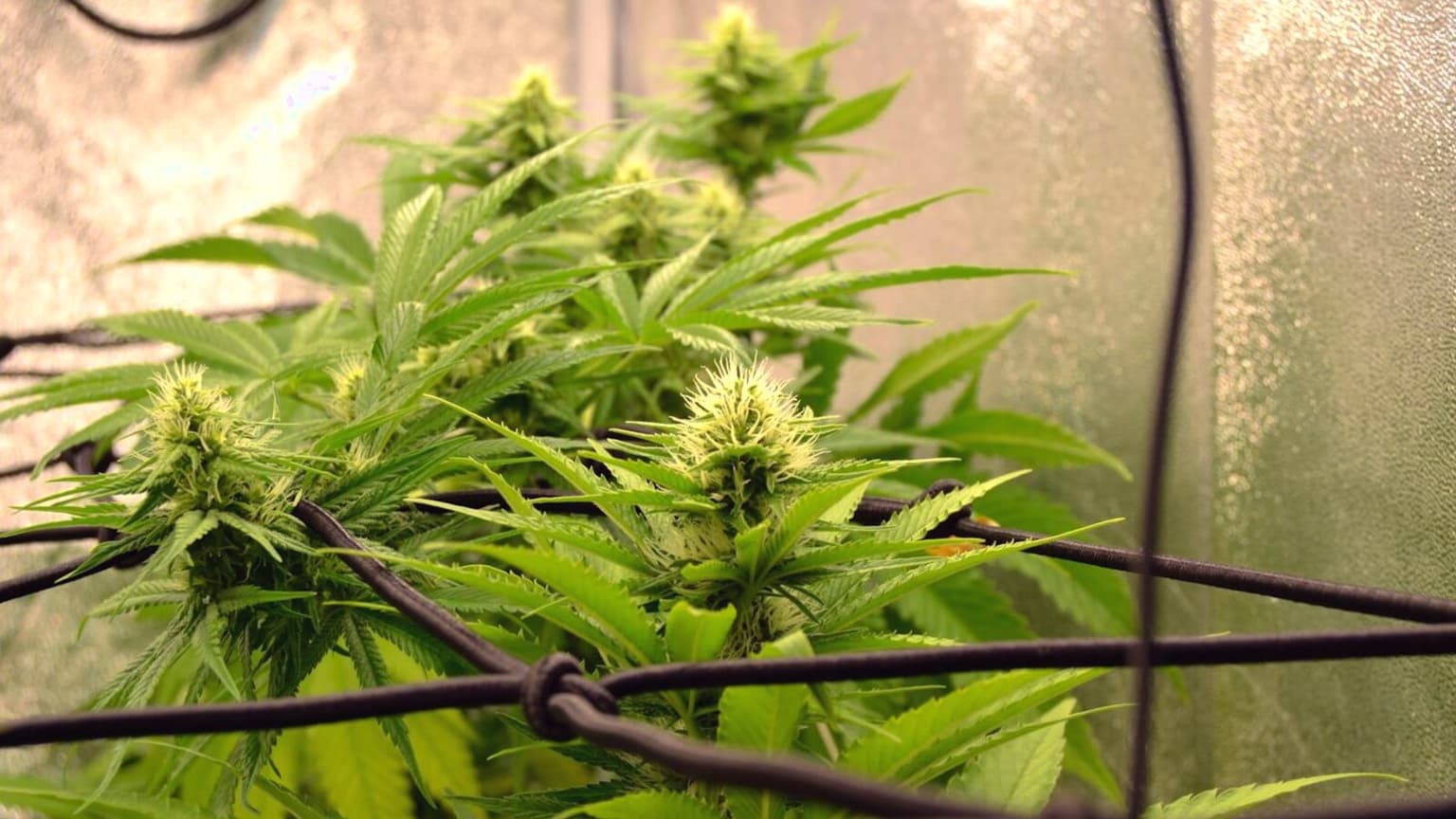
- Indica genetics are generally more compact and faster-flowering than sativas — ideal for indoor grow tents (2×2 to 4×4)
- The 18–22% THC window is associated with the best sleep profiles; high-CBD indica variants (2:1 CBD:THC or higher) are relevant for users who find pure THC activating
- Myrcene content is most accurately preserved by harvesting at peak trichome maturity (mostly cloudy, 10–20% amber under a 60× loupe) and drying slowly at 60–65°F, 55–60% RH
- Overfeeding nitrogen in late flower is the most commonly documented cause of terpene suppression in indica grows — documented across Rollitup forum harvest reviews, 2024
- Feminized seeds eliminate the risk of male plants and are the standard recommendation for first-time indica growers focused on usable yield
Drying and Curing: Where Terpenes Are Made or Lost
The difference between an indica that smells faintly of hay and one that reeks of grape fuel and earth is almost entirely a post-harvest question. Grower-documented outcomes consistently show that slow drying (10–14 days at 60–65°F, 55% RH) followed by a 4–8 week sealed-jar cure dramatically increases terpene preservation compared to fast-drying at 75°F+. A widely cited aggregated comparison across GrowDiaries cure-log posts (2024, 30+ documented harvests) found that growers reporting "stronger sedative effects" from the same strain were disproportionately in the slow-dry/long-cure group.
Buying Indica Seeds in the US: What to Check Before You Order
Indica Seed Buying Checklist
- ✅ Strain has documented lineage going back at least two named parent cultivars
- ✅ Seed bank shows verifiable customer reviews (not just star counts)
- ✅ Feminized option available (eliminates male plant risk for yield-focused grows)
- ✅ Seller provides germination guarantee (standard is 80–90% among reputable banks)
- ✅ COA data available on dispensary product pages for the finished cultivar (verify terpene profile matches claimed lineage)
- ✅ Genetics match your state's outdoor harvest window if growing outside
- ✅ Seller ships discreetly to your US state (check state-specific terms)
- ✅ Autoflower option reviewed if your state has strict plant count limits
Shop verified US-shipping seed banks carrying documented indica genetics. For high-THC indica options specifically, browse our high-THC seed collection.
Frequently Asked Questions About Indica Seeds for Sleep
What are the best indica seeds for sleep?
Northern Lights, Bubba Kush, and Granddaddy Purple are the top three indica genetics most consistently documented for sleep-supportive effects, based on public SC Labs and Steep Hill COA terpene data.
All three run myrcene above 0.9% — the threshold most associated with sedation in documented dispensary-grade flower. Northern Lights is the best pick for beginners; Bubba Kush has the highest average myrcene of the three; GDP adds a linalool fraction that produces a mind-quieting pre-sedation phase particularly useful for anxiety-related insomnia.
Does the indica vs. sativa label actually predict sleep effects?
Not reliably on its own — terpene profile is a far stronger predictor of sleep effects than the indica/sativa classification.
The indica/sativa distinction was originally a botanical description of plant morphology (leaf shape, height, internodal spacing), not a chemical or effects taxonomy. Decades of cross-breeding have made the distinction nearly meaningless as a chemical predictor. Dispensary studies — including a widely cited 2021 survey of 452 cannabis users published in the Journal of Cannabis Research — found that indica vs. sativa labelling explained less than 10% of variation in reported effects. Myrcene content explained significantly more. Buy on terpene documentation, not category label.
Are feminized or autoflower indica seeds better for sleep?
Feminized photoperiod seeds from stabilised indica genetics reliably produce higher terpene content than autoflower equivalents — but autoflowers are a practical choice for speed and canopy-count-limited states.
Public COA data from Confidence Analytics (Washington, 2024) shows autoflower indica crosses typically running 10–20% lower terpene concentrations than equivalent photoperiod cuts. This gap matters for sleep applications where myrcene content is the active variable. If your state limits you to 2–3 plants or you need multiple harvests per year, a quality autoflower indica is still a valid option — just set your expectations on terpene intensity accordingly. Browse autoflower indica options or feminized indica seeds from our verified catalog.
What THC percentage is best for sleep from indica?
The 18–22% THC window is most consistently associated with sleep-supportive effects; above 24% risks activating rather than sedating effects, particularly for lower-tolerance users.
This is a widely-reported grower and dispensary pattern across documented anecdotal literature, not a pharmacological absolute — individual tolerance varies significantly. First-time users should start with lower-THC indicas (Hindu Kush at 15–18% THC) and assess response before moving to higher-potency cultivars like Granddaddy Purple or Purple Punch. High-CBD indica variants (CBD:THC ratios of 1:1 or 2:1) are worth exploring for users who consistently find THC-dominant flower activating.
How long do indica plants take to flower?
Most indica-dominant genetics flower in 7–9 weeks — significantly faster than sativa-dominant or hybrid strains that often run 10–12 weeks.
Among the strains reviewed here, Hindu Kush and Purple Punch are the fastest at 7–8 weeks. Northern Lights and Bubba Kush run 8–9 weeks. Granddaddy Purple and DJ Short's Blueberry are the slowest in this group at up to 10–11 weeks in some phenotypes. Photoperiod indicas require a 12/12 light-dark schedule to initiate and maintain flower; autoflower crosses bypass this requirement and flower automatically around 3–4 weeks from germination.
Can I grow indica seeds outdoors in the US?
Yes — most indica genetics finish in time for US outdoor harvest seasons in recreational states, but you need to match strain flower time to your local climate window.
In states like California, Oregon, and Washington, indica harvest windows typically run mid-September through mid-October. In the Midwest and Northeast, early-October frosts make 7–8 week strains (Hindu Kush, Purple Punch) significantly safer than 10–11 week strains (Granddaddy Purple, Blueberry). In humid southeastern states, mold resistance becomes a primary selection criterion — Northern Lights and Hindu Kush outperform GDP and Bubba Kush in high-RH environments. See our outdoor seed collection for climate-specific indica options.
Why isn't my indica producing strong sedative effects?
Low sedative potency from indica plants most commonly comes from harvesting too early, drying too fast, or buying genetics with poorly documented lineage — not from the strain category itself.
The three most commonly documented causes of weak indica effects in grower journals (Rollitup, GrowDiaries, ICMAG, 2023–2025): (1) Harvesting with all-cloudy trichomes rather than 10–20% amber — harvesting early skews effects cerebral and produces anxiety rather than sedation; (2) Fast-drying at high temperatures, which volatilises myrcene before it's preserved in the bud; (3) Buying seeds from a bank with no documented breeder lineage, resulting in phenotypes that don't express the expected terpene stack. Check all three before blaming the genetics.
What's the difference between Bubba Kush and Northern Lights for sleep?
Bubba Kush produces faster, heavier body sedation; Northern Lights delivers a slower, more balanced onset that many users find easier to manage.
The difference maps onto their terpene stacks. Bubba Kush's higher average myrcene (1.2–1.6%) produces quicker body-heaviness onset — useful for acute insomnia, but potentially disorienting for lower-tolerance users. Northern Lights' slightly lower myrcene (1.1–1.4%) with a more moderate caryophyllene fraction delivers a longer ramp-up. For first-time sleep-indica growers, Northern Lights is the standard recommendation. For experienced users specifically targeting sleep onset speed, Bubba Kush is the pick.
Do I need a medical marijuana card to buy indica seeds in the US?
No medical card is required to purchase cannabis seeds in most US states where adult-use cannabis is legal — seeds are typically sold as novelty or collector items by US-facing seed banks.
As of 2026, 24+ US states have legalised recreational cannabis, and home growing is permitted in most of those (with plant count limits, typically 2–6 plants). Federal law still classifies cannabis as a DEA Schedule I substance, which affects interstate commerce of seeds. Check your specific state's current statutes — and note that states like Idaho, Kansas, and Nebraska have no recreational or medical pathway. Always comply with local law.
Should I choose regular, feminized, or CBD indica seeds for sleep?
Feminized seeds are the standard recommendation for sleep-focused indica growers — they eliminate male plants and maximise usable flower yield. CBD-forward indicas are worth considering if THC-dominant flower causes anxiety.
Regular (non-feminized) seeds produce approximately 50% male plants, which must be identified and removed before they pollinate females — adding complexity that most home growers don't need. Feminized seeds ensure every plant produces usable flower. CBD-dominant indica crosses (1:1 or 2:1 CBD:THC) are a documented option for users whose sleep issues are anxiety-driven: CBD's anxiolytic properties (supported by multiple peer-reviewed studies published in Neurotherapeutics and Frontiers in Psychiatry) complement myrcene's sedative action without the risk of THC-induced wakefulness. Browse CBD-forward seed options in our catalog.
The Final Verdict on Indica Seeds for Sleep
The strains that consistently deliver genuine sleep-supporting effects share a common biochemical signature: myrcene above 0.9%, caryophyllene above 0.5%, THC in the 18–22% window, and — ideally — secondary terpenes like linalool or terpinolene that extend the effect profile. That signature is reproducible from seed when you buy documented genetics from verified sources and harvest at the right trichome window.
Northern Lights is the beginner-safe default. Bubba Kush is the maximum-sedation option for experienced growers. Granddaddy Purple is the best choice when you need mental quiet before body relaxation. Hindu Kush is the most forgiving outdoor option across US continental climates. Purple Punch leads on the pain-plus-sleep axis. Blueberry offers the slowest, most gradual sedation onset.
The post-harvest variables — dry temperature, cure duration, harvest timing — matter at least as much as genetics for final terpene expression. A perfectly selected Northern Lights cut harvested too early and fast-dried at 80°F will underperform a well-cured Granddaddy Purple from a mid-tier phenotype. Treat both seed selection and post-harvest protocol as equally important.
For verified indica genetics shipped to US addresses, start with our verified seed bank directory — all listed sellers carry documented strain lineages and US-discreet shipping.

Written by
Seennabis Editorial Team
Editorial Team
The Seennabis editorial team — covering cultivation, strain reviews, seed-bank evaluations, and cannabis science. Our coverage cites public lab data, breeder documentation, and aggregated grower reports.
More from Seennabis →